When Roy Chapman Andrews’s camels came home from the Gobi, his expedition was only half done. The other half happened in the lab, one grain of rock at a time. For DinoDawn, that half has now begun.
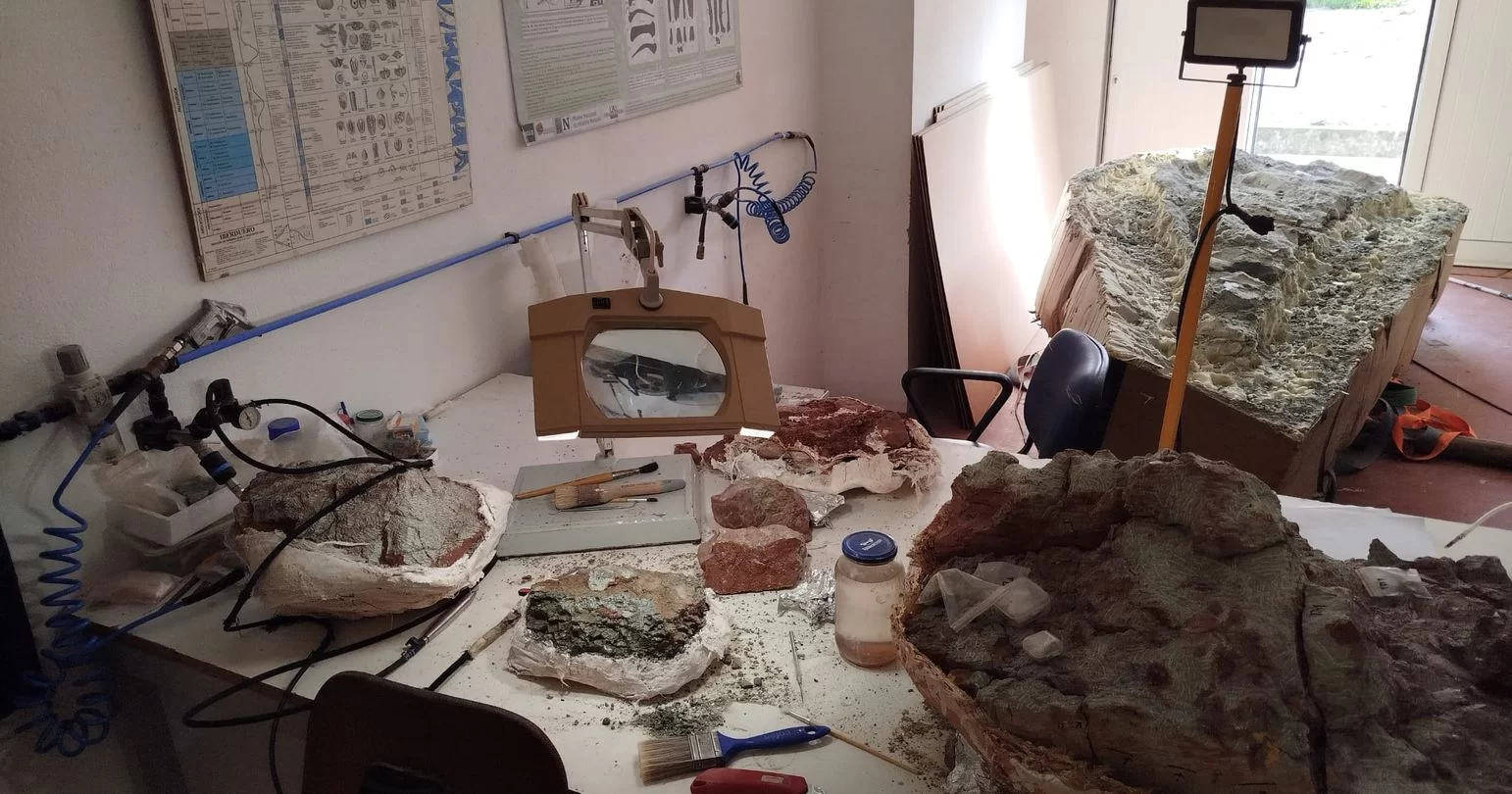
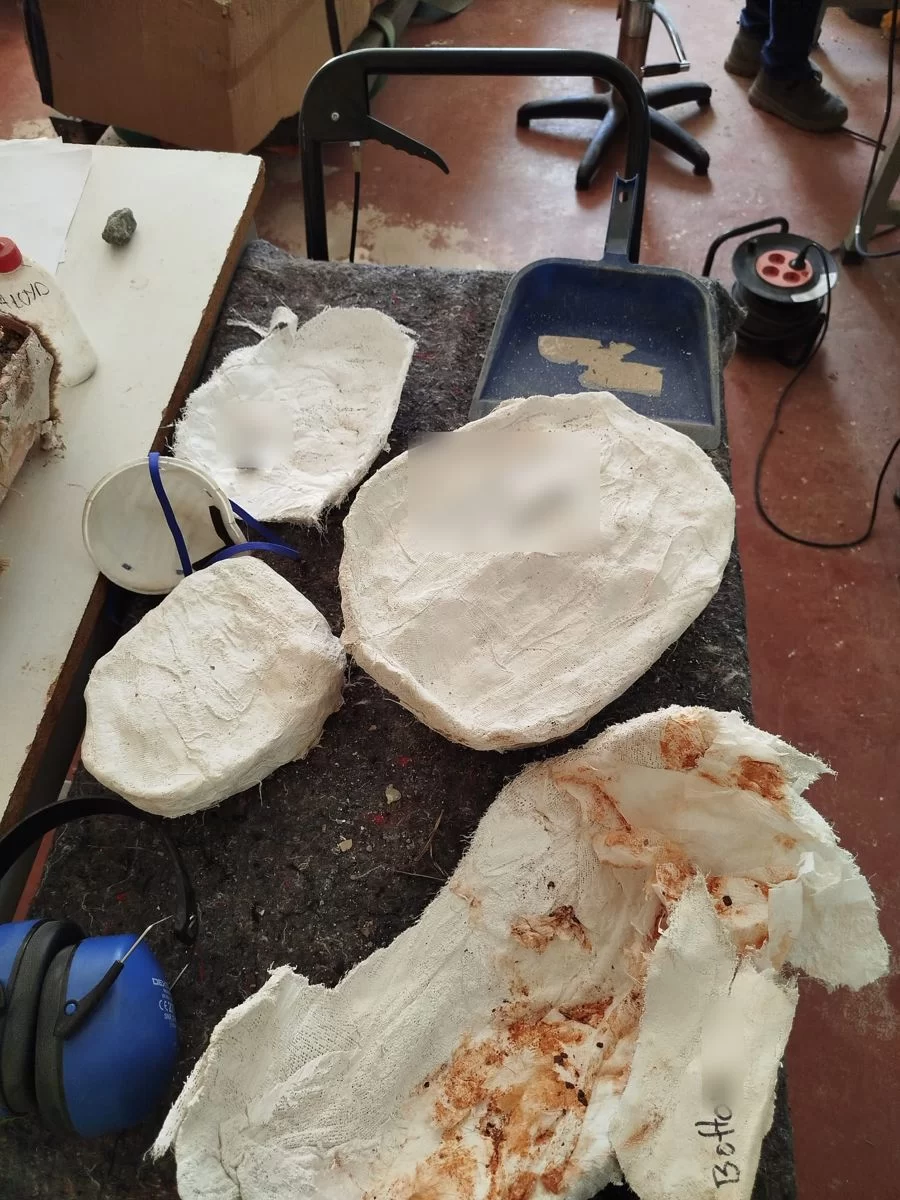
At the Sociedade de História Natural in Torres Vedras, fossil preparator Marco Turcato has started on the blocks the team carried out of the Algarve hills. Nobody knows exactly what is inside yet.
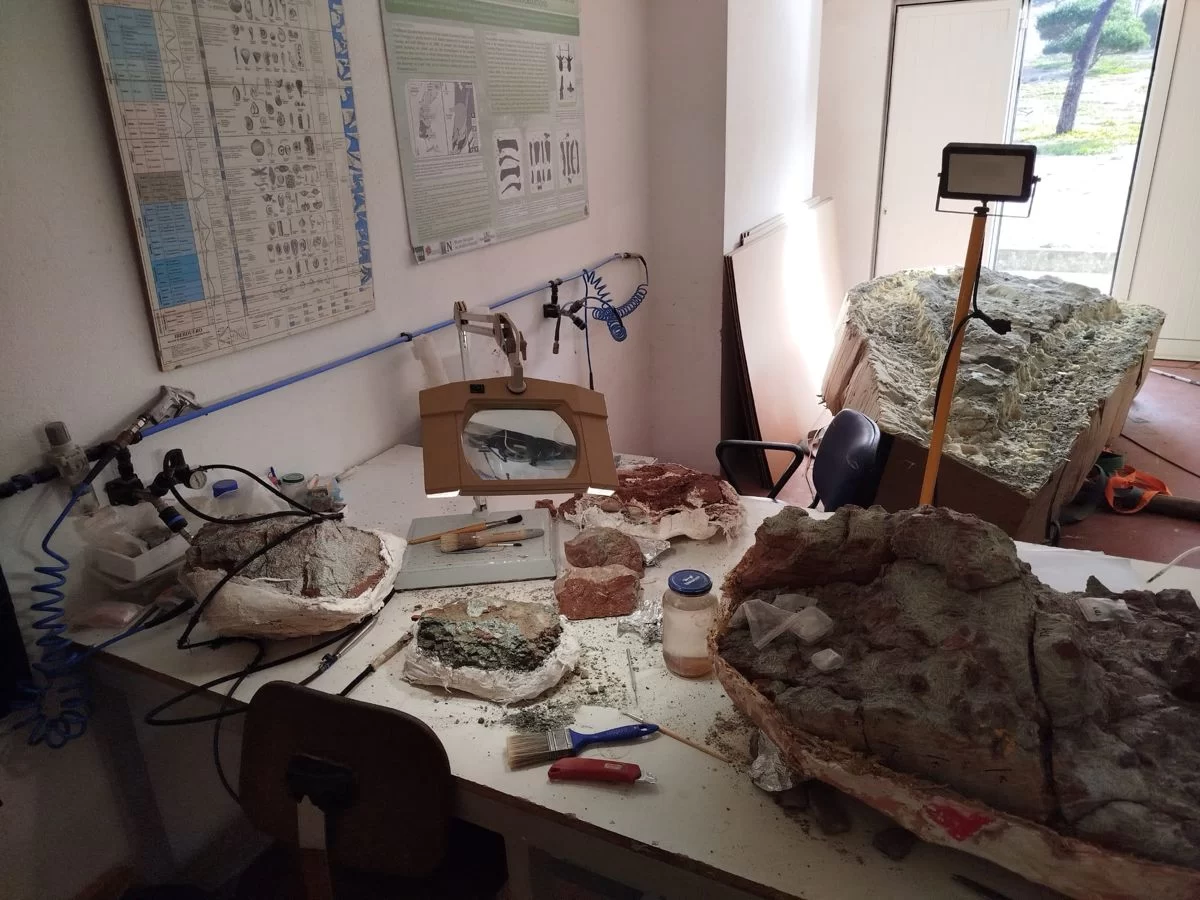
Marco did not start with an important block. He picked a small one first, to learn how this rock behaves under an air scribe, a pneumatic tool about the size of a pen that chips rock away a grain at a time. Every rock has its own temper, and it is better to learn it on a block that matters less. He has also opened a first block from this season’s dig to see how it responds.
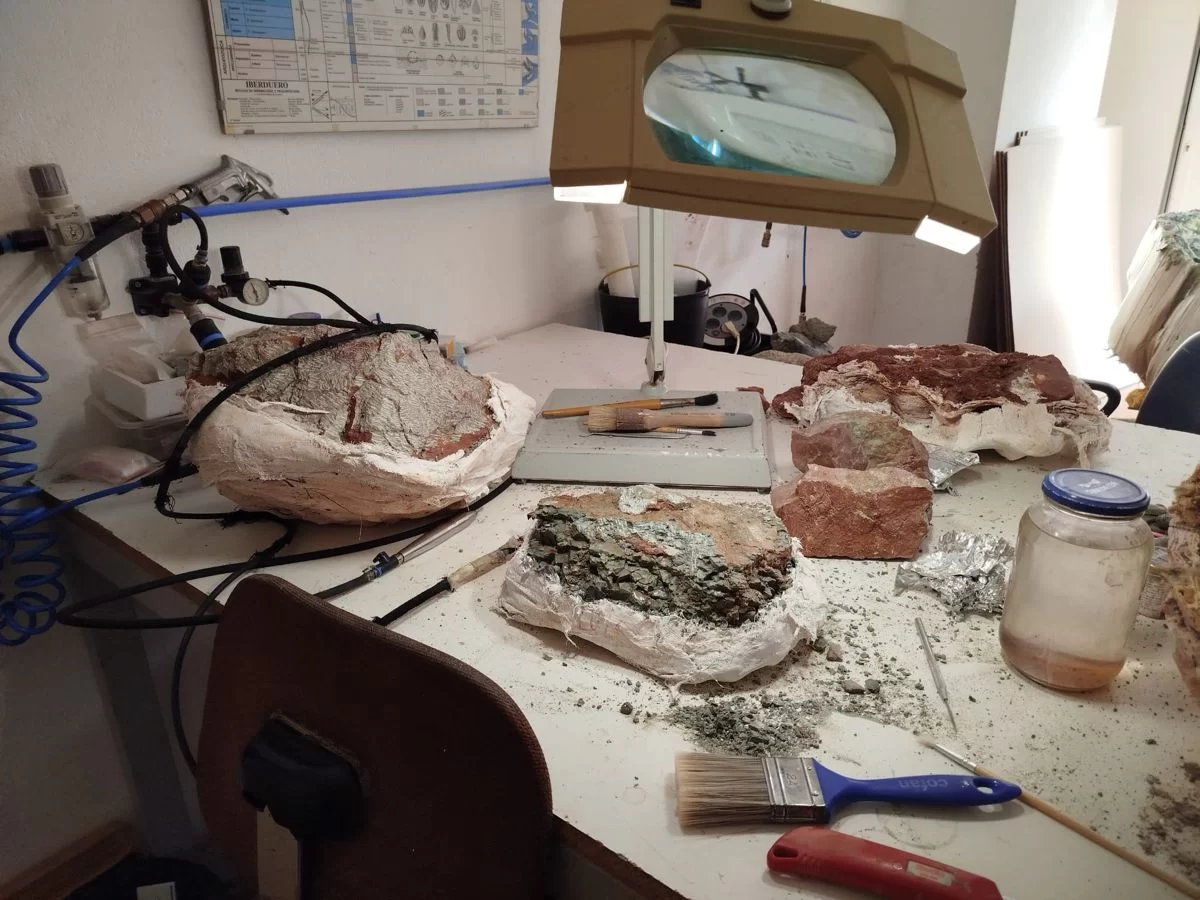
What the blocks hold stays in the lab until the scientists have studied it. Field Notes will report it the day they give the word.
Marco has also built a 3D model of a block that was already prepared, stitched together from overlapping photographs. The real blocks are heavy and fragile, and every trip is a risk. The model weighs nothing, never cracks and can go anywhere a researcher has a laptop.
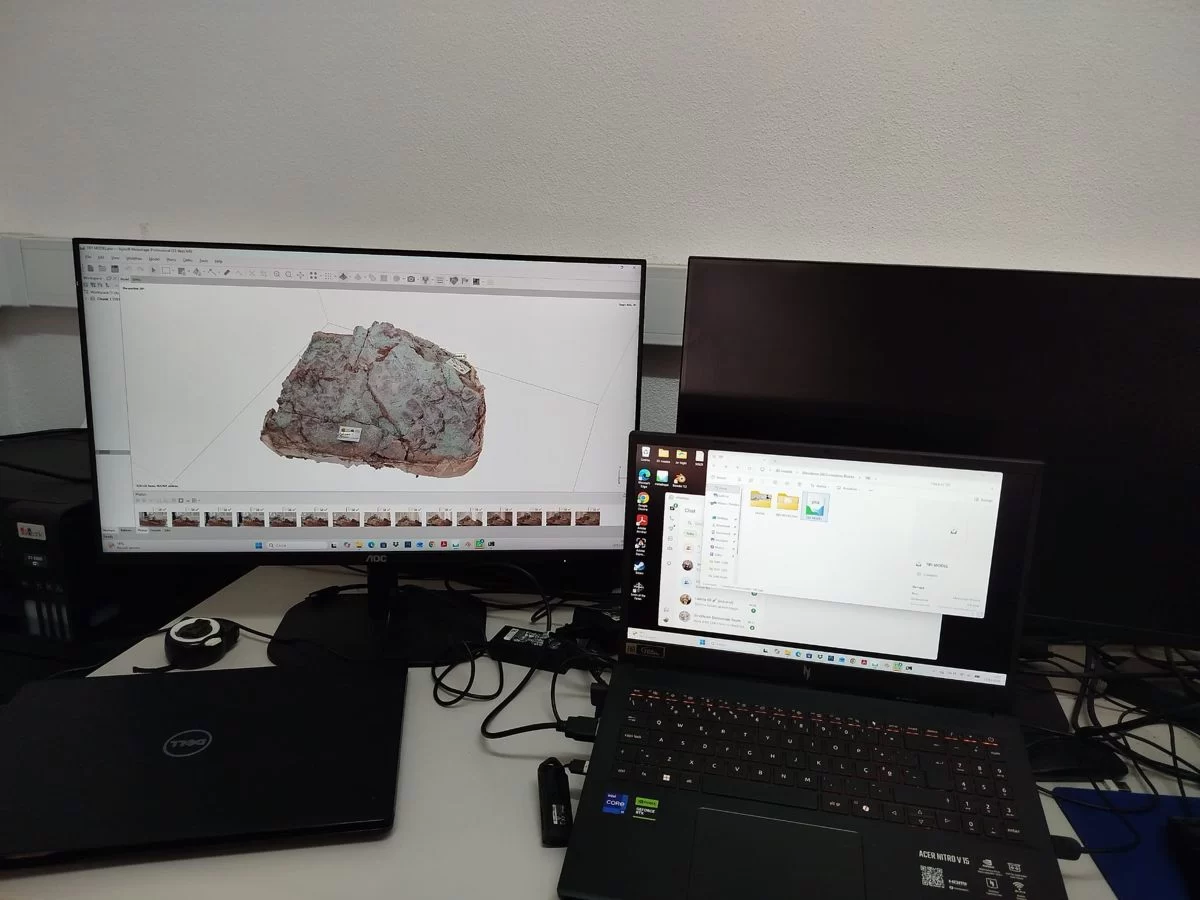
A 3D model is a backup for every block, and it lets someone study it without coming to the lab.
Marco Turcato, field team
Marco has offered to send updates from the bench, and Field Notes will carry them as the blocks open.