ConditionsSunny and mild
VisitorsA school group
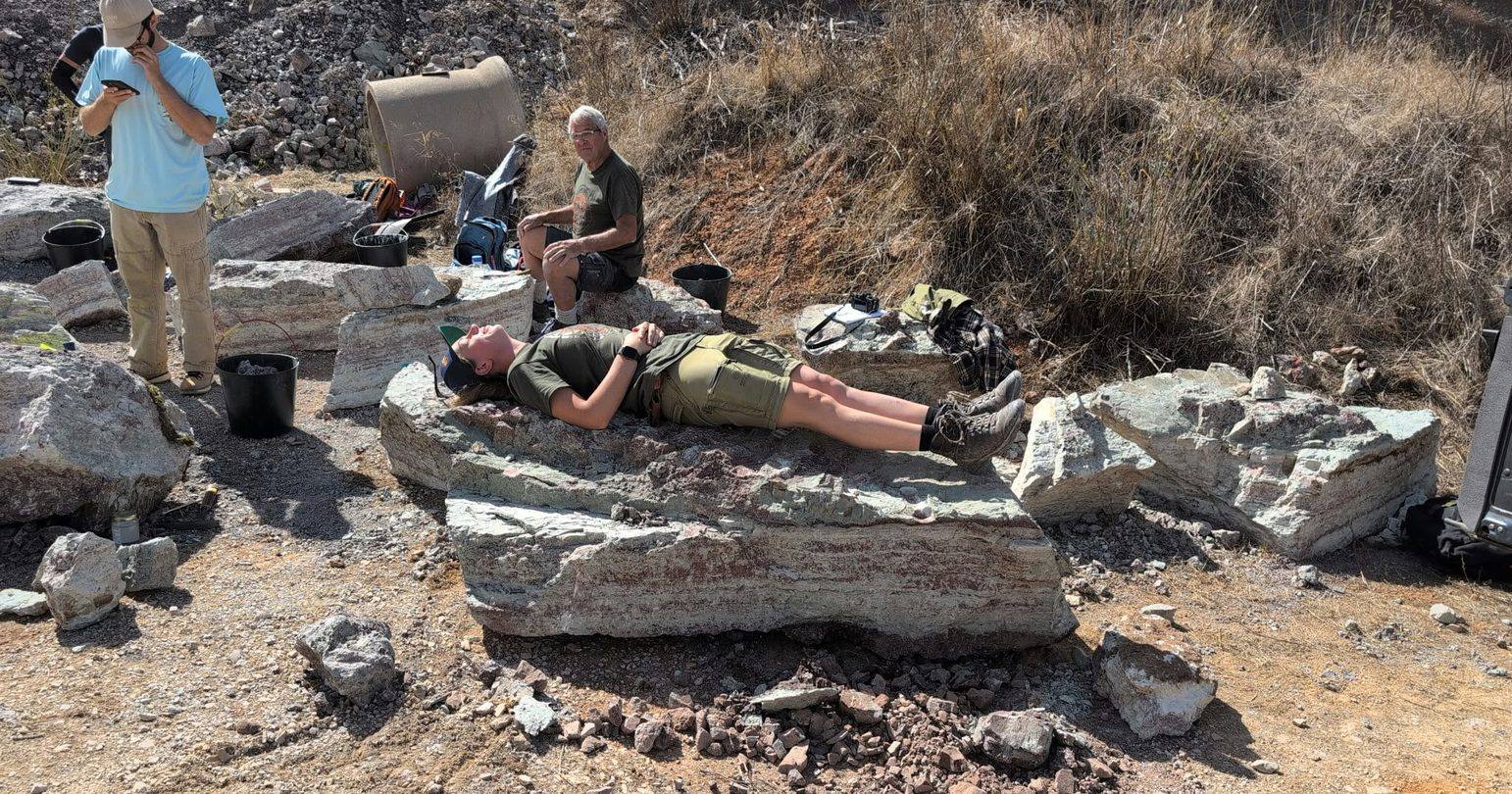
Biggest blockLonger than a person
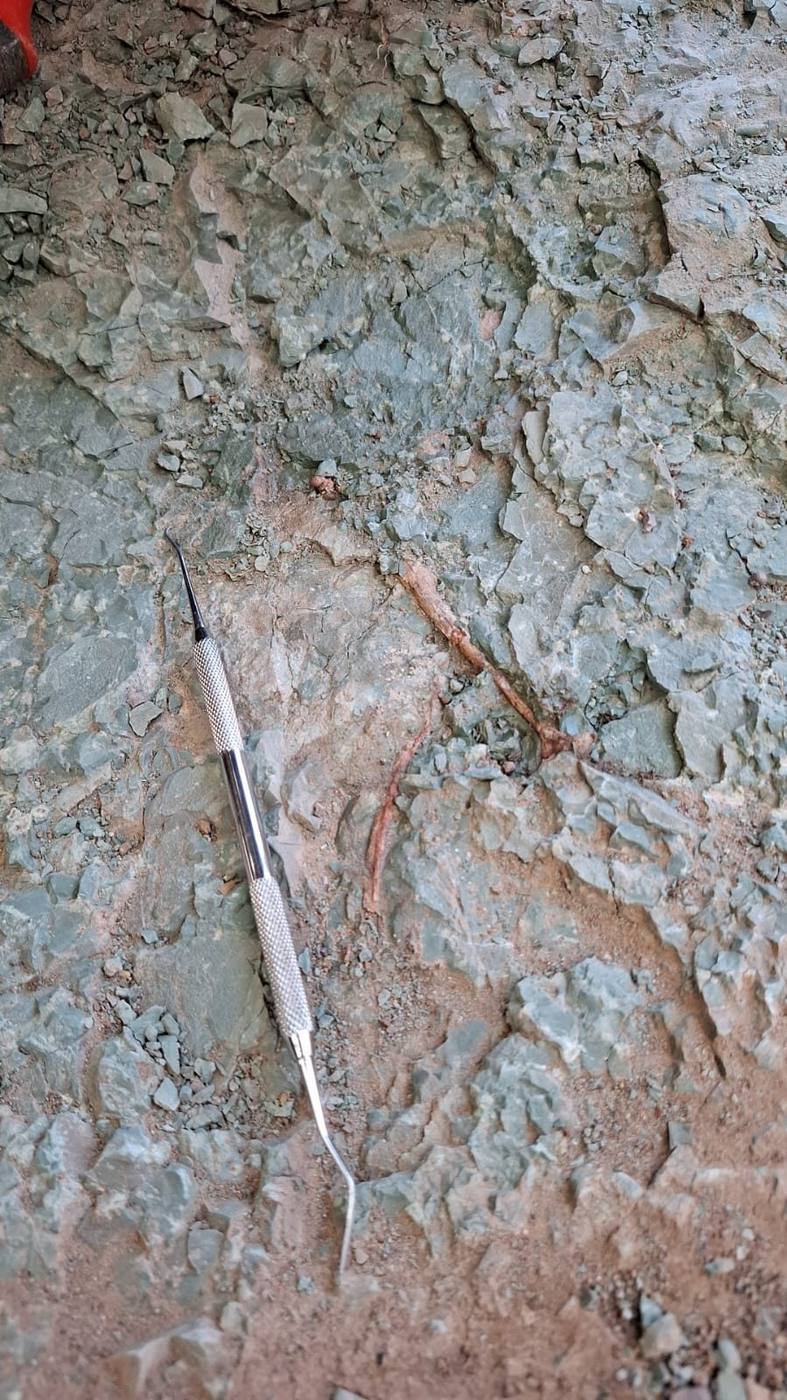
A bone that survived more than 200 million years in the rock can be lost in a second. Long thin bones are the worst. One careless move snaps them. They are exactly what the second site keeps finding.
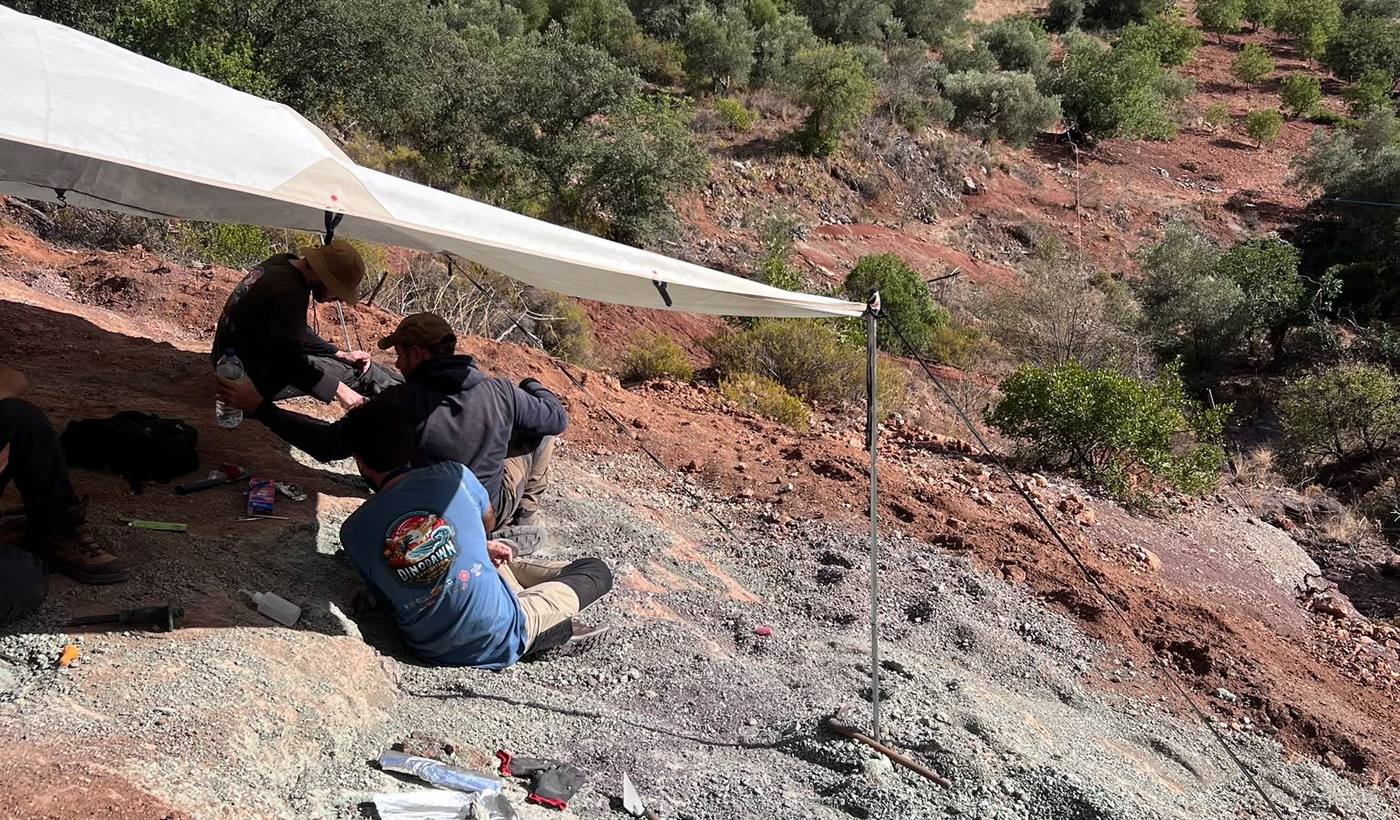
After 4 days of digging to reach it, the team is now working inside the layer they came for, a greenish band near the top of the hill. The rock is brittle and will not be hurried. Each fragile find is cut free in a small block, wrapped in plaster and lifted out whole.
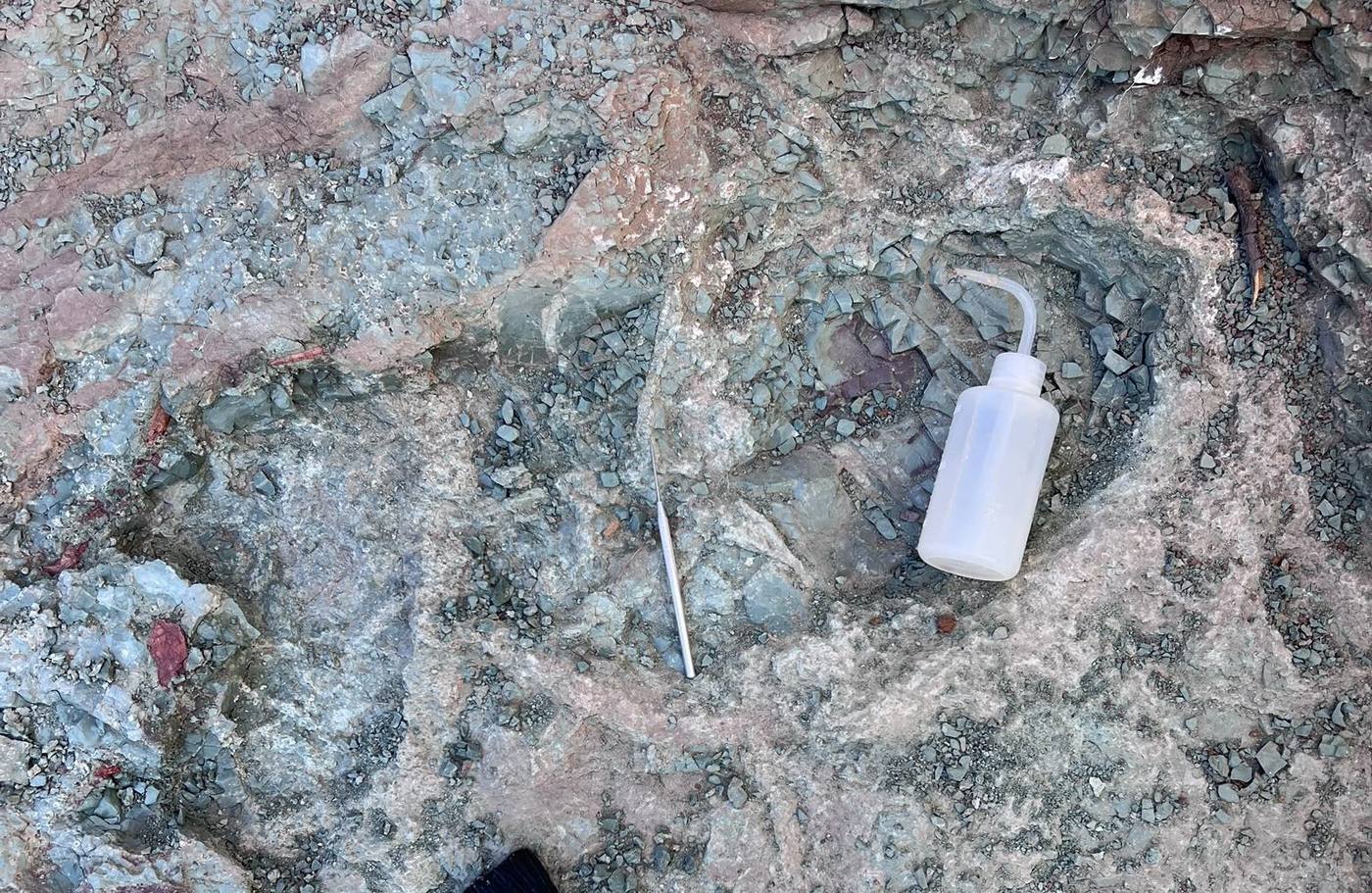
And the layer is giving. The team has found vertebrae and ribs, one of them from a placodont. There are long bones no one can yet name, and there is a complete fish. The fish material is more complete than last year’s, says Victor Carvalho, and it may help identify the species the team found last season.
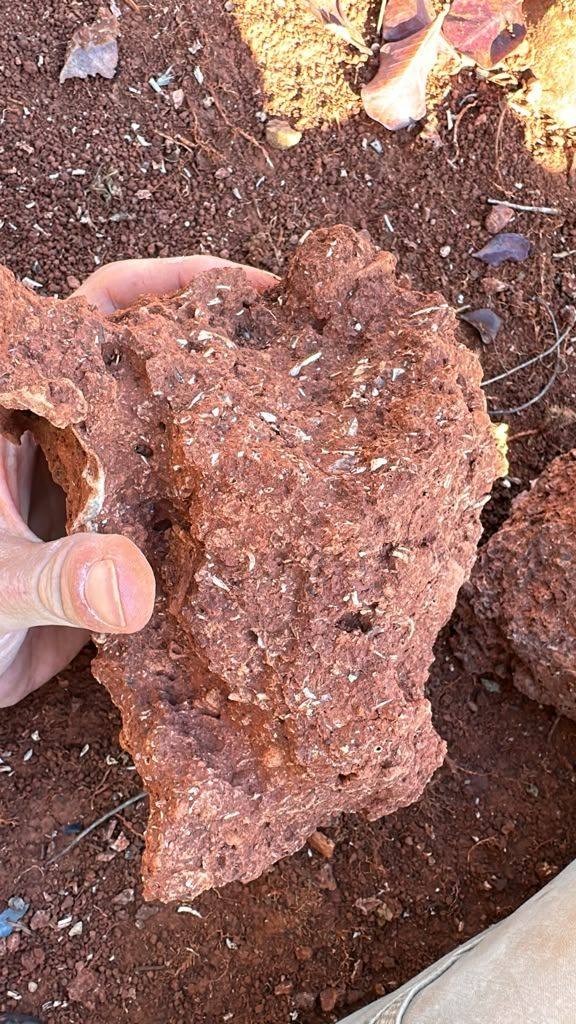
Higher in the hills, Miguel Marx found bones from another age entirely. In the limestone sits a cave deposit packed with the bones of small mammals and other vertebrates. They do not even look fossilized. Miguel suspects they are Holocene, perhaps a couple of thousand years old. By this dig’s standards, that is yesterday.
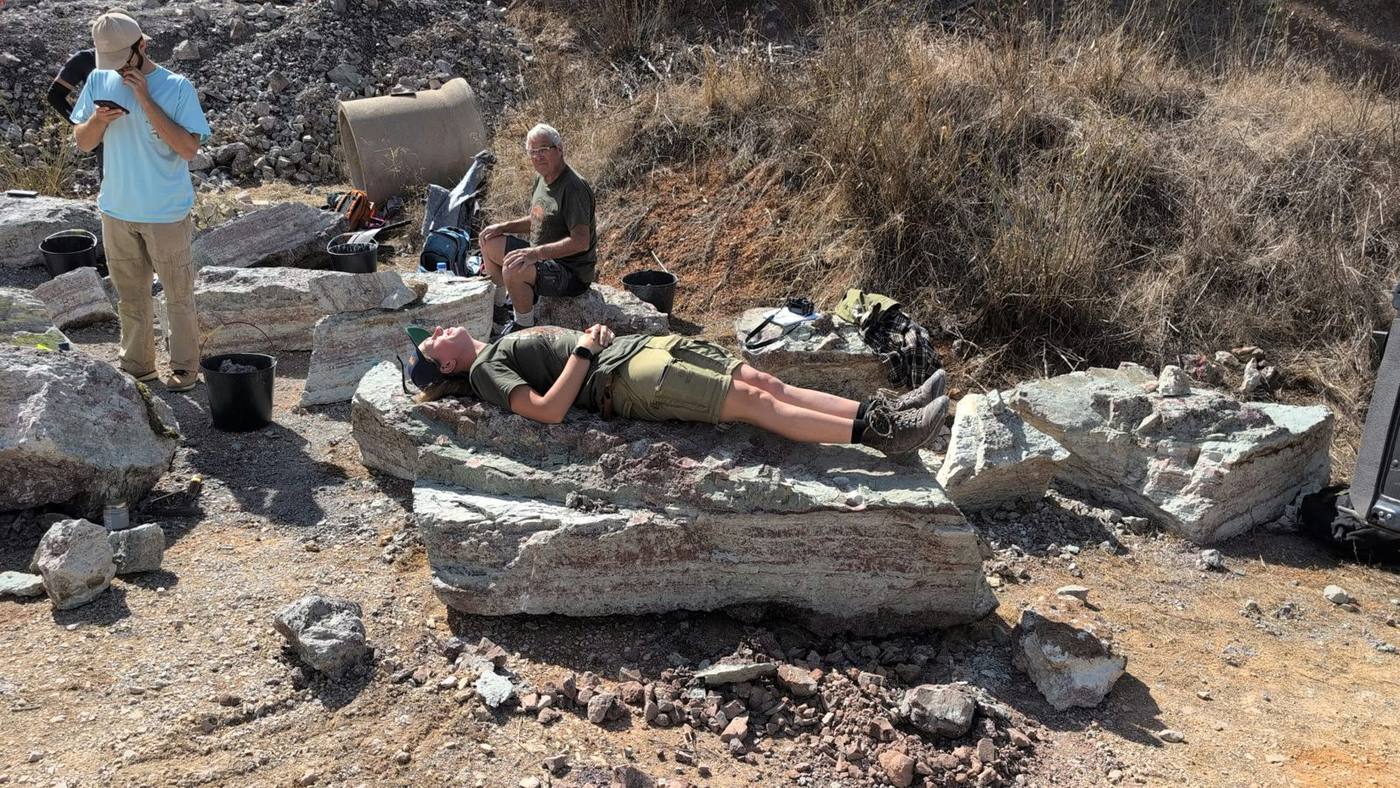
At the first site, the excavator came back armed. Around lunchtime it was fitted with a hydraulic hammer, built to break out even bigger blocks. One of them is longer than Klara Gerken is tall, and she lay down on it to prove it. The hammer freed about 4 more blocks, and the team kept undercutting the fossil layer. The excavator returns tomorrow for the last of them.
The rest of the team kept chiseling away the rock above the layer, to see how much fossil each block holds. The answer keeps getting more interesting, Klara says, in the fossils and in what the rock records about how they were buried. The first site did no plastering that day, and the blocks are piling up. Tomorrow the team has to speed up and choose which blocks to keep.
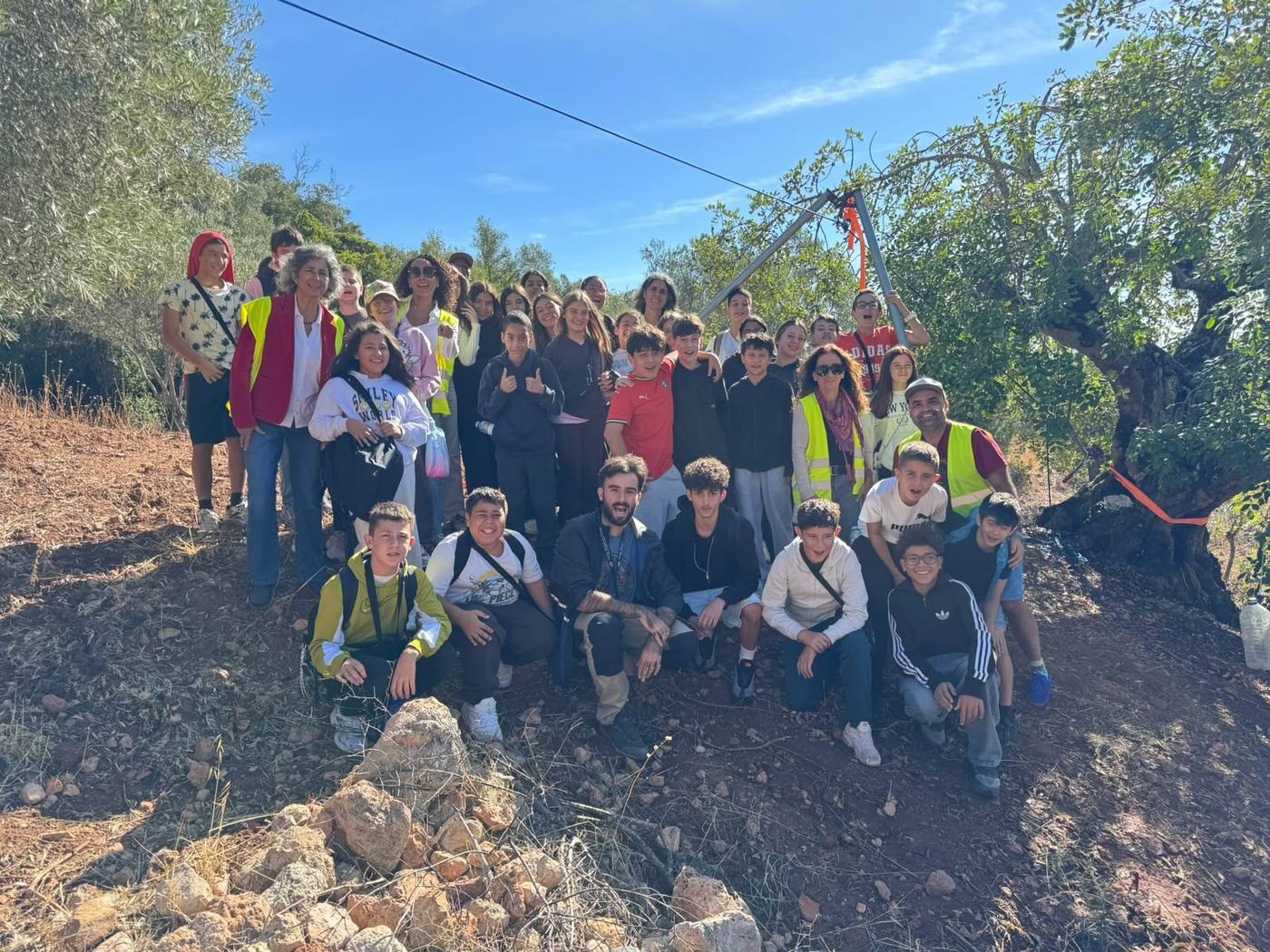
The day also brought visitors. A group from a local school started in the village square with João Neves, learning what paleontologists do and where geology meets biology. They saw the tools of the trade and fossils from the collection of the Sociedade de História Natural: bivalves, echinoderms, ammonites. Then they walked up to the dig to watch the real thing.
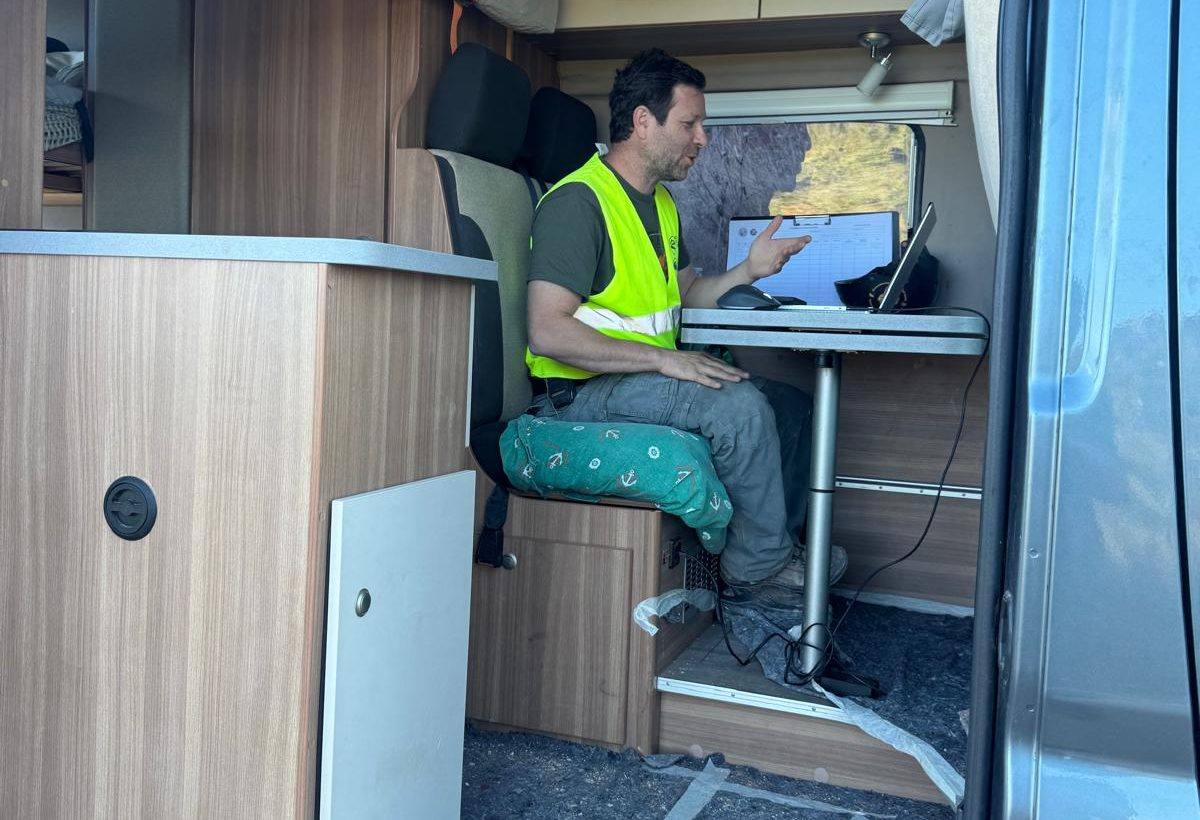
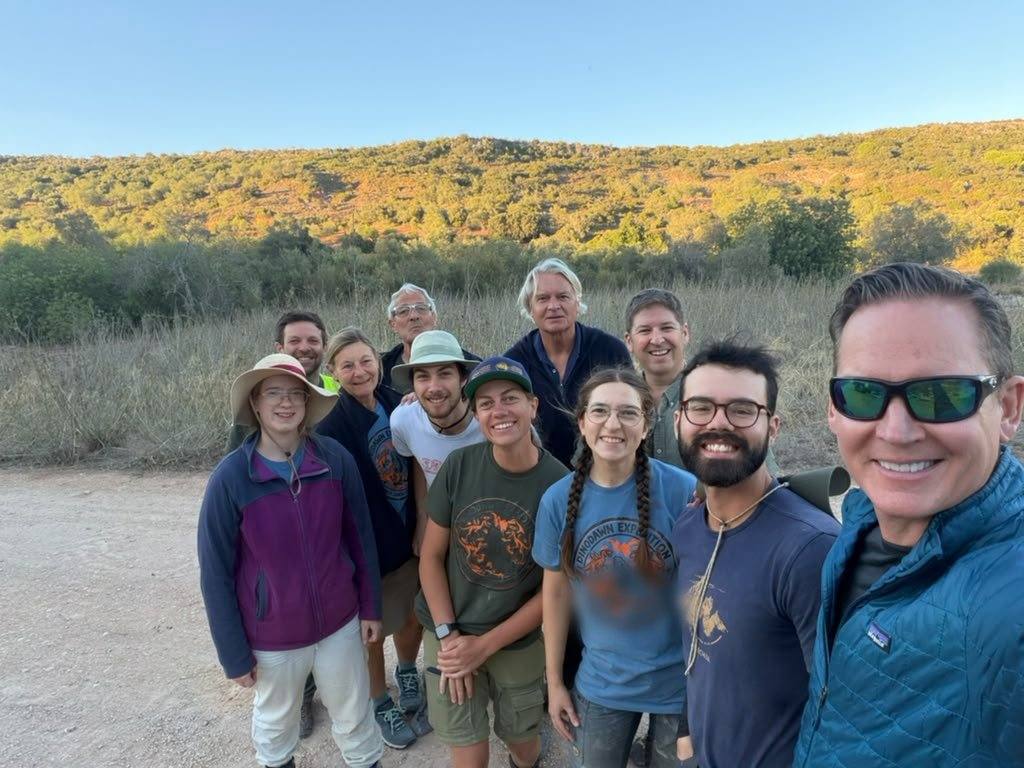
Lars Finskud, Dave Finnegan and David Isserman arrived on site too. And Ricardo Araújo, still in his high visibility vest, gave a live talk by Zoom from a folding table in the team’s van, for The Explorers Club’s Dispatches from the Field series: “In the Field with the Triassic: The First Dinosaurs, Mammals, and the Tangled Origins of Warm-Bloodedness.”
Tomorrow the first site lifts its last blocks. At the second site, Victor wants a jaw. The layer has not said no.