ConditionsDry and mild
First siteInto row E
Second siteLayer fully exposed
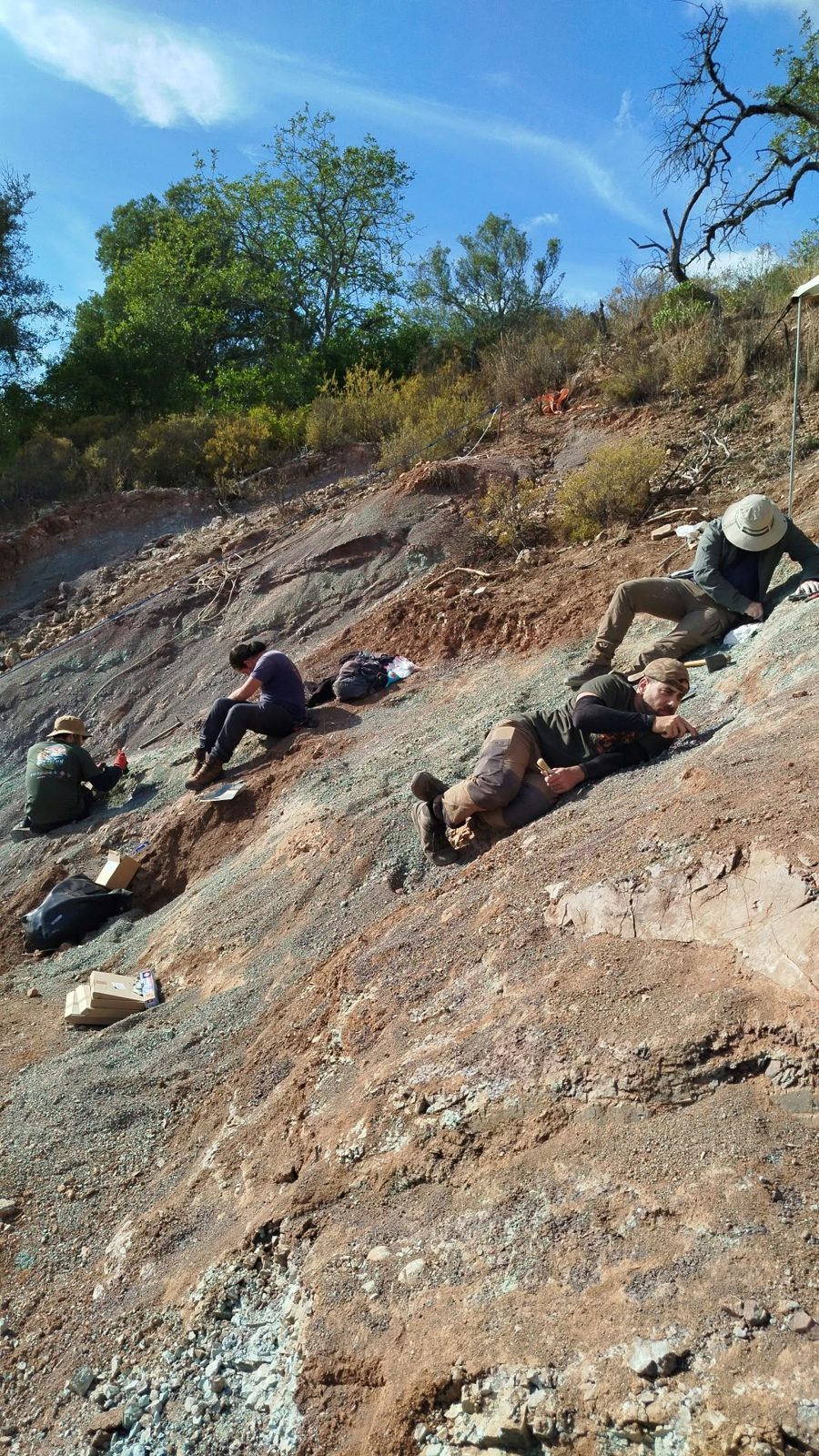
The excavator cannot climb to the second site. So for 4 days, that hill has been opened the old way: by hand. For 2 of those days, rain and hail drove the team off the slope by mid afternoon. On day 4, the sky finally held.
By lunchtime the quarry was open, and the fossil layer lay bare: a greenish band of rock, seen whole for the first time. With the ground dry at last, the generator came on and the jackhammer went to work.
Then the team sat down in the layer and began to collect, piece by piece. Vertebrae. Long bones. Fish scales by the handful. And, report Victor Carvalho and Leonardo Bonelli, remains that probably belong to other animals. Which animals, no one can yet say.
The bones are fragile, and none of them hurries out of the rock. Tomorrow is the first full day in the layer, and it is a test. If the layer keeps giving, the team stays. If it goes quiet, they already have a fallback: on Sunday, Victor, Kirill Trifonov and Bruno Camilo found another promising spot while prospecting.
Away from the quarries, Miguel Marx and Maciej Ruciński have nearly finished reading the land. The first site now has its place in the region’s larger geological story. Only the colors of the rock layers remain to be recorded.
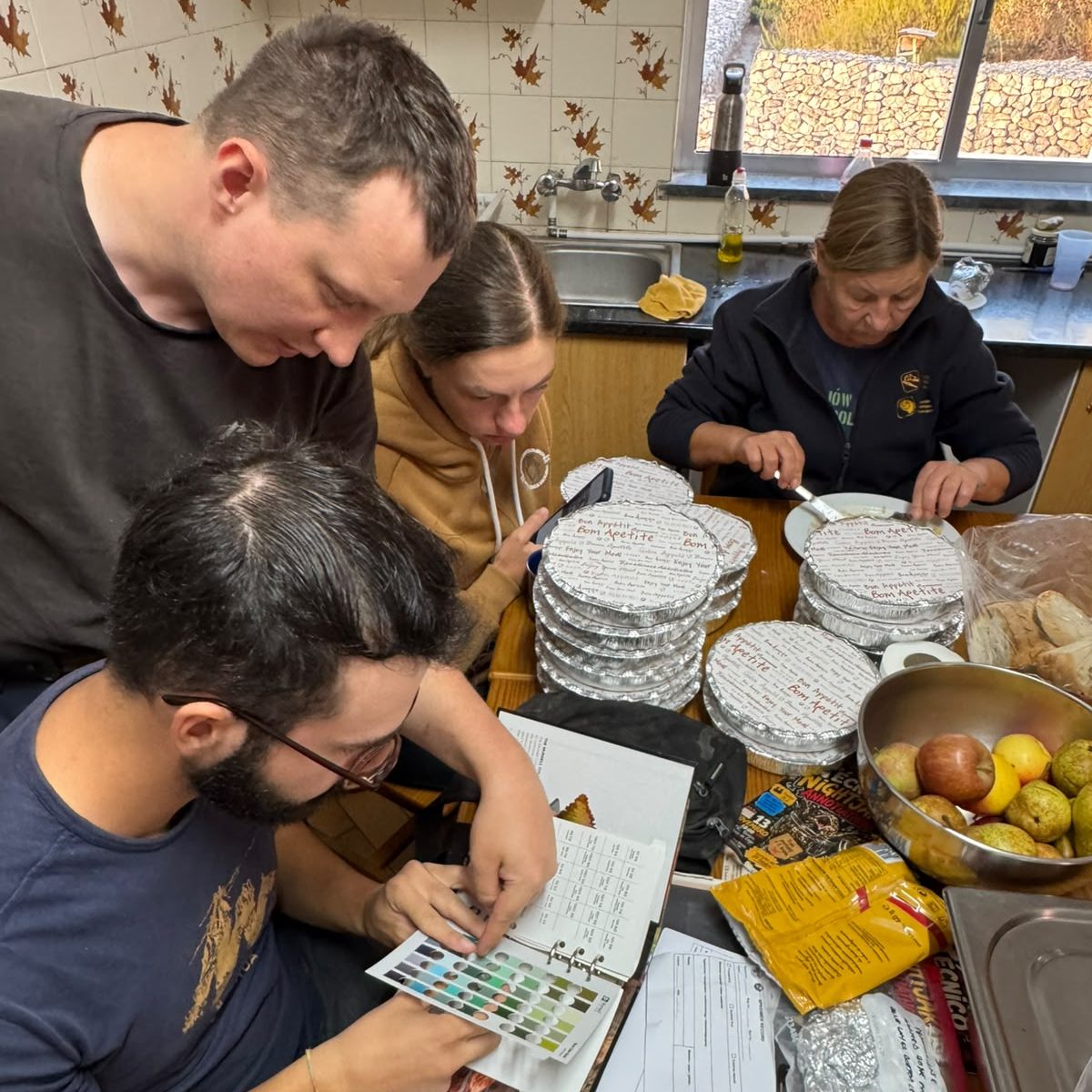
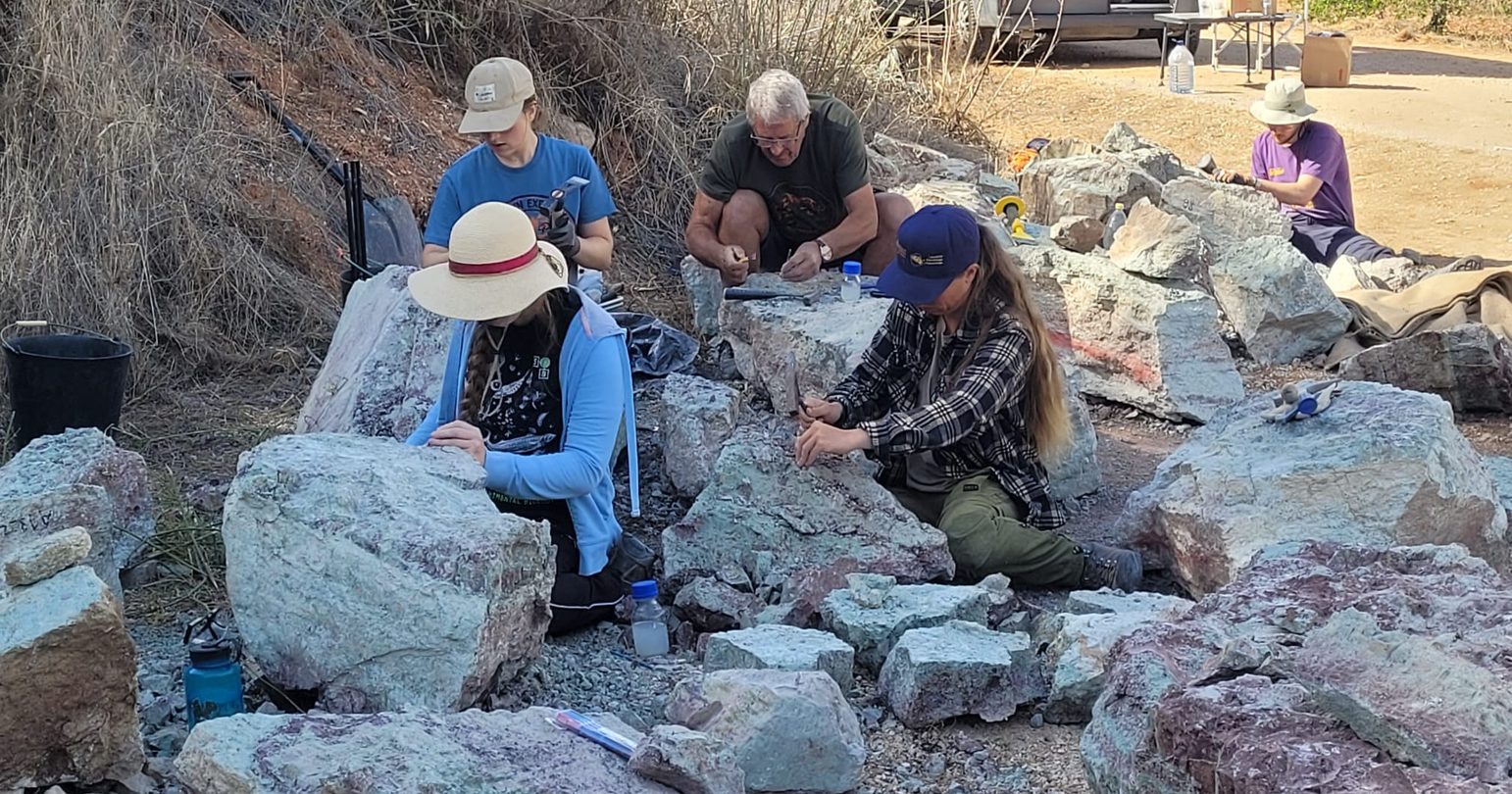
At the first site, the problem runs the other way: too much rock, not too little. The excavator pulled the biggest blocks it could from the cliff, and the team is deep into row E. Tomorrow, Ricardo Araújo plans to stop extracting for good. After that, the blocks own the days: cleaning, plastering and packing for the trip home.
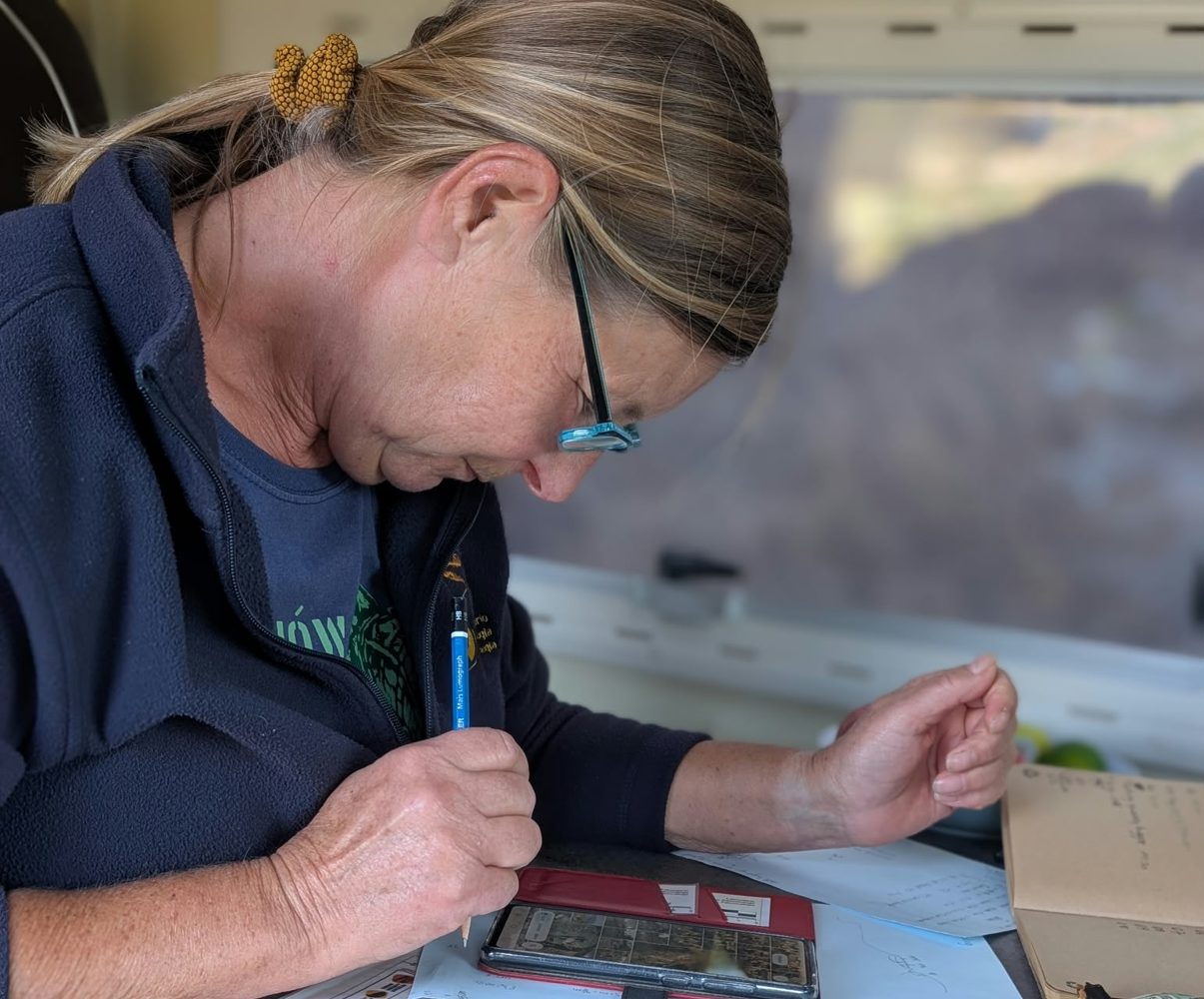
No block leaves without its address. Hilde Desmet is recording where every one sat, alongside the photographs, so that in the lab the bonebed can be put back together the way the hill held it.
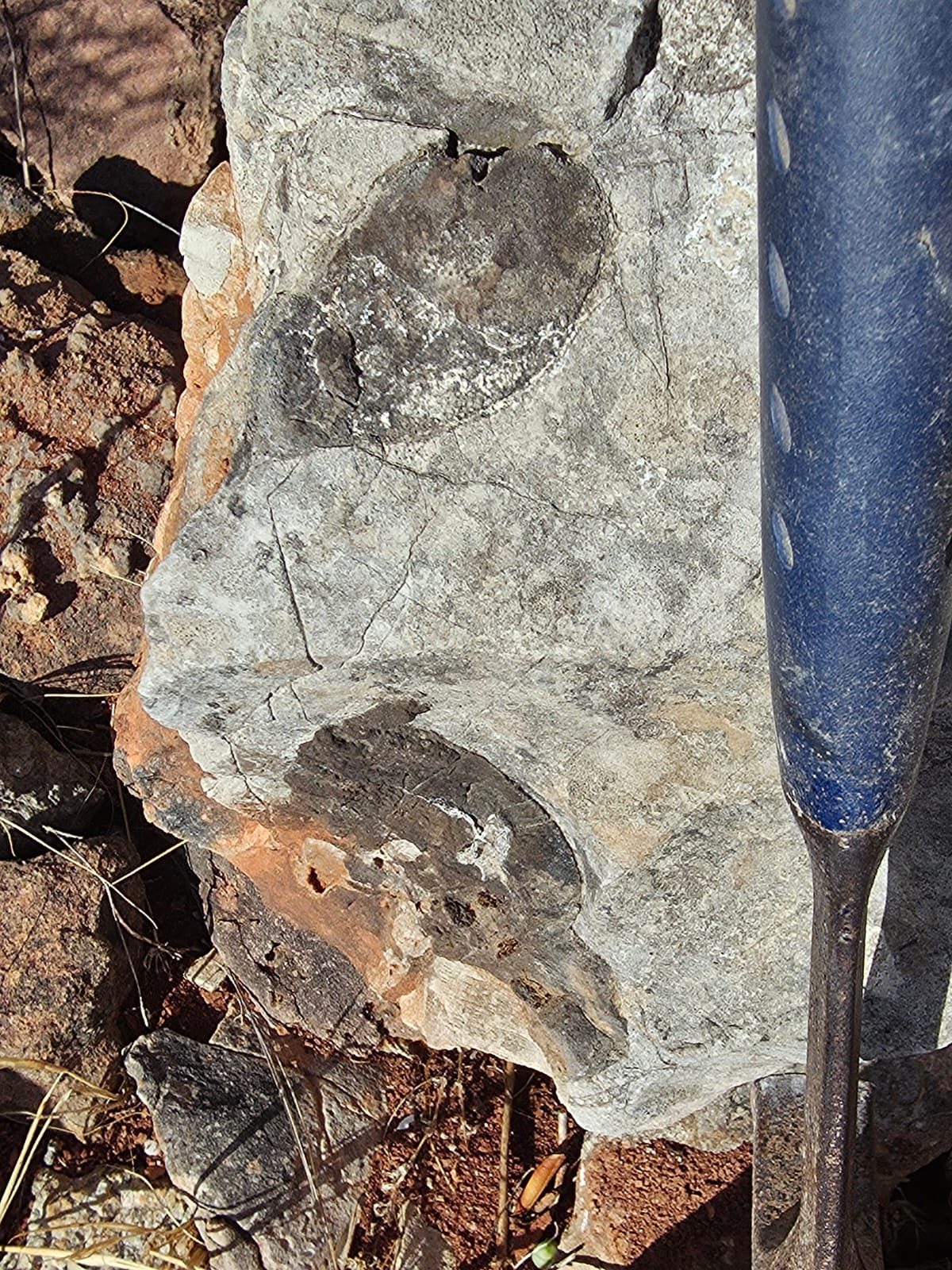
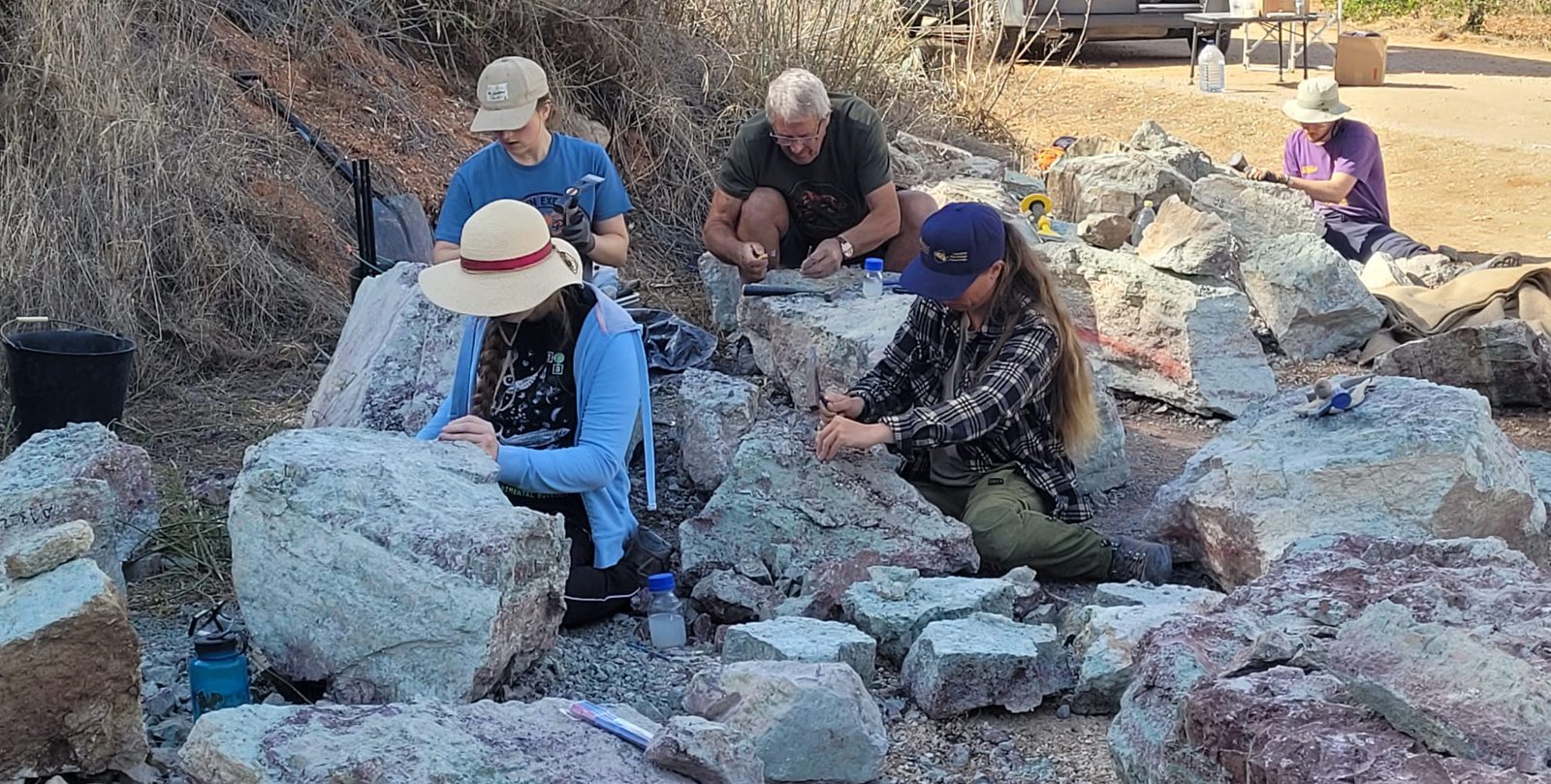
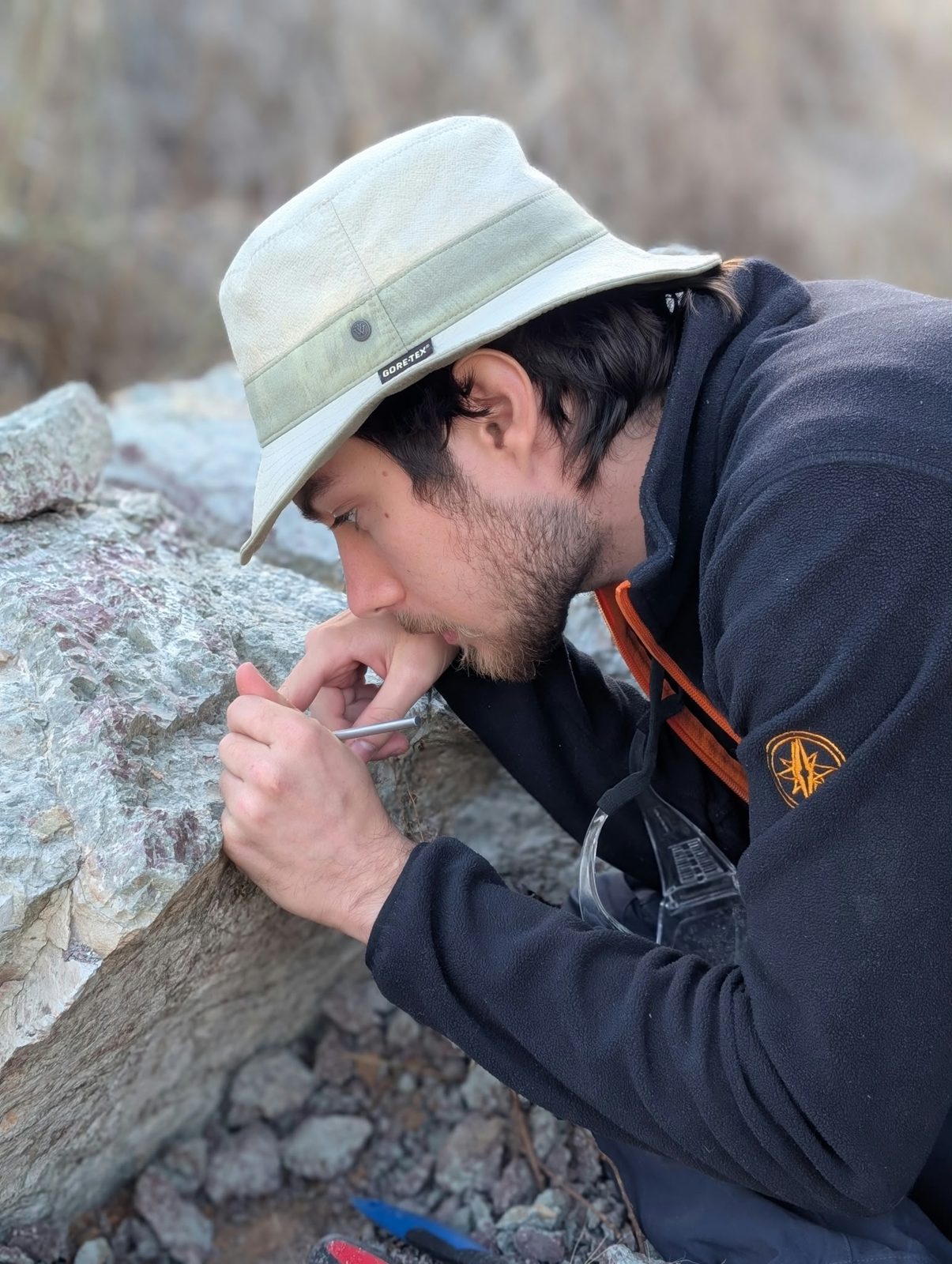
And the blocks are starting to talk. Most of the team spent the day cleaning them, and things keep appearing that are unusual for this site. Alongside the usual osteoderms, the team has found what is likely a neck rib, a toe or finger bone, and what appears to be a piece of a placodont’s belly shell. Most of it is small and crumbly, and has to be coaxed out whole. One block holds red fossils and white fossils side by side, a puzzle the lab will have to solve.
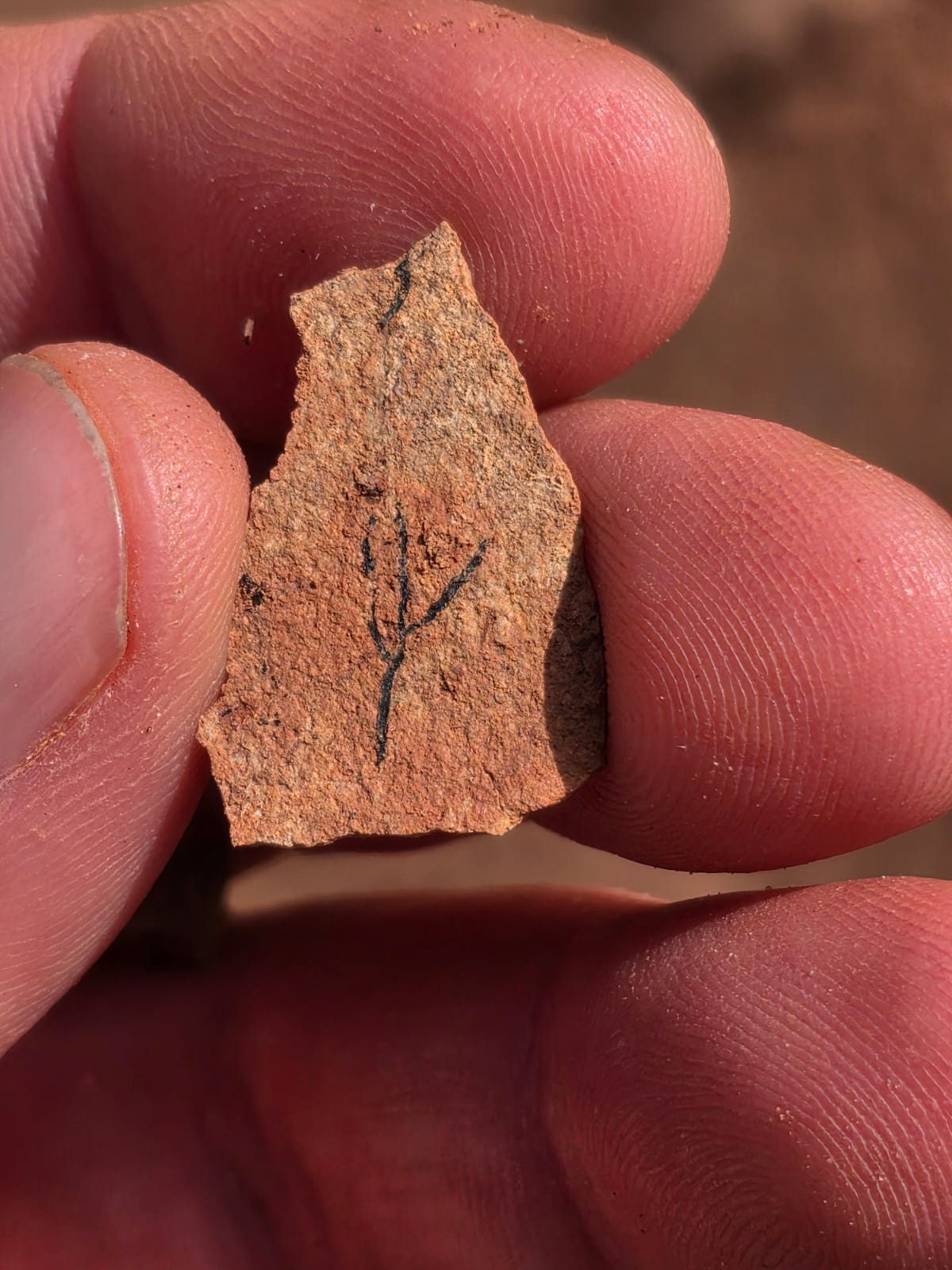
Word has spread through the hills, and people from the area keep climbing up to watch. When a big truck got stuck, the expedition’s excavator, more used to lifting fossils, helped pull it free.
Then the plaster. Each block is wrapped in strips soaked in plaster, left to set, flipped, and wrapped again from the other side. By the end of the day, a row of white jackets lay on the gravel like loaves on a baker’s rack, and some of the plaster had found its way onto the team’s faces.
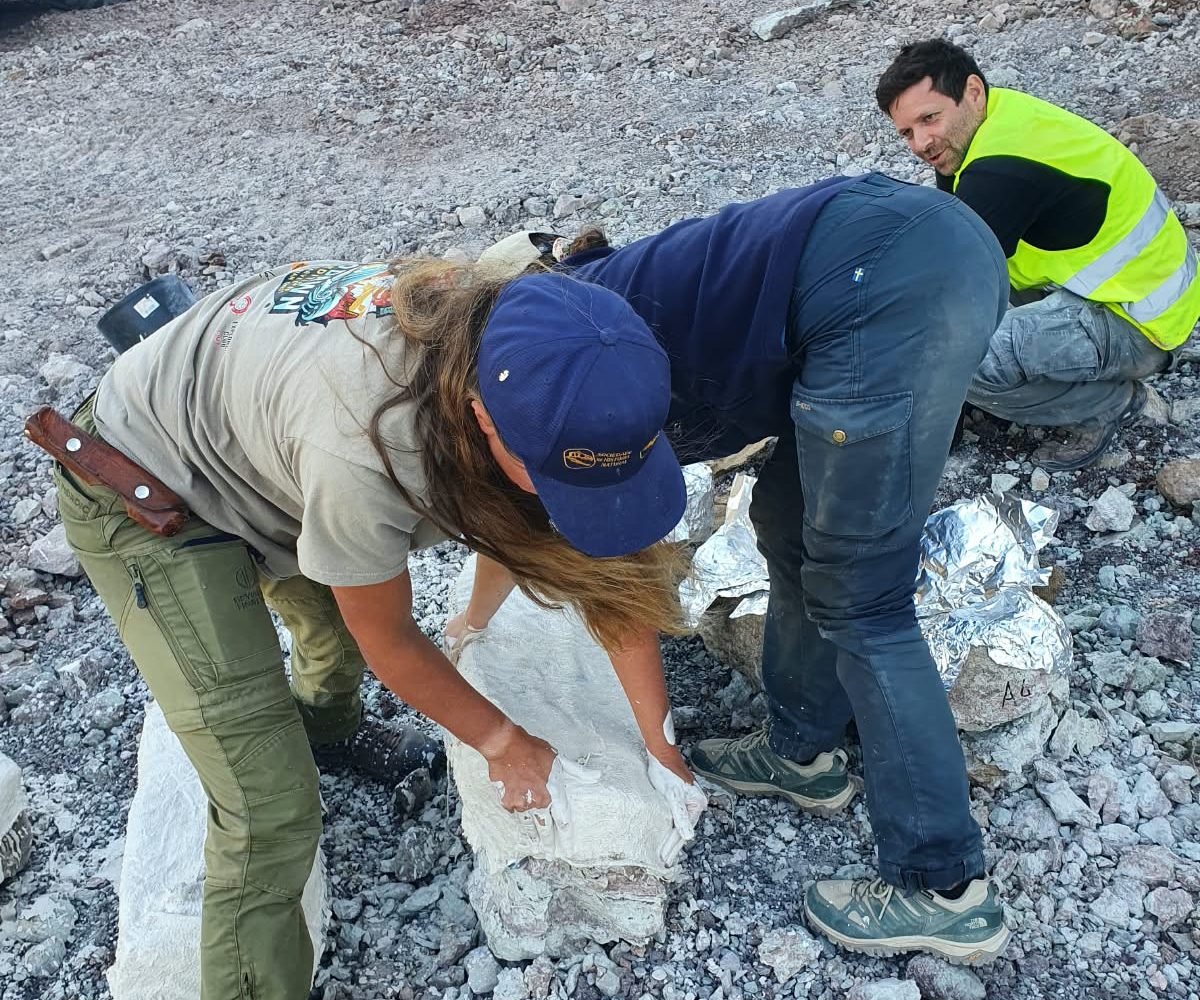
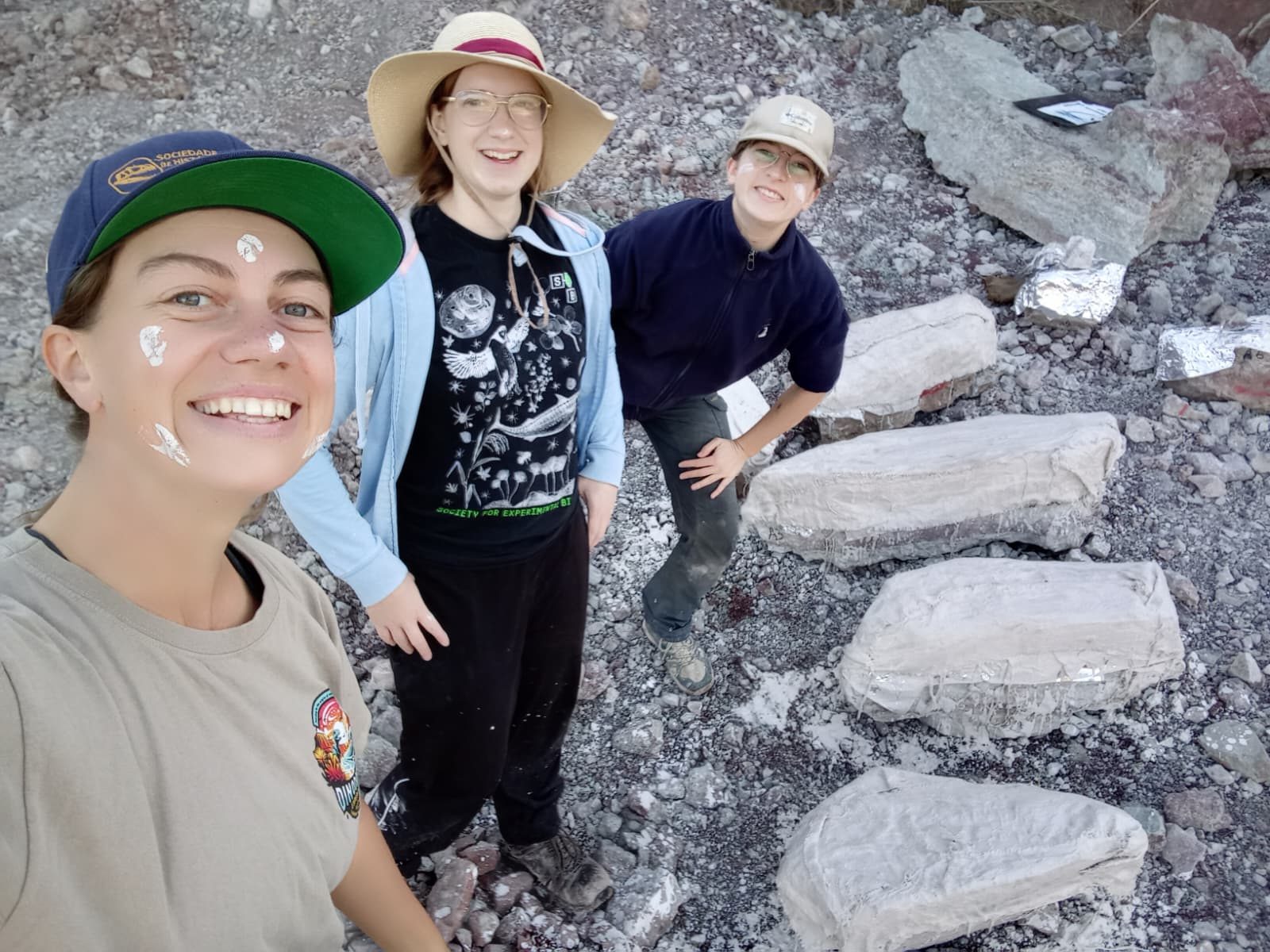
We already have way more blocks than last year. Now we have to find out which fossils are inside, and which ones we actually want to take.
Klara Gerken, field team
The team has already lifted more blocks than in all of last season. That turns tomorrow into a day of hard choices as much as digging: deciding which blocks hold fossils worth carrying to the lab, and how much to take home.
One site is nearly done taking rock out of its hill. The other has only just got in.