SeasonFinal day
CargoEvery block
ArrivedSHN, tonight
Roy Chapman Andrews left the Gobi with a caravan of camels. The DinoDawn team left the Algarve hills with a flatbed truck, a camper van, a hardware store van and a wheelbarrow. It is less romantic, but the wheelbarrow does not spit.
Day 10, the final day of the 2026 season, was short on work and long on everything else. The morning went to waiting for the truck. The afternoon went to making sure 9 days of work got onto it in one piece.
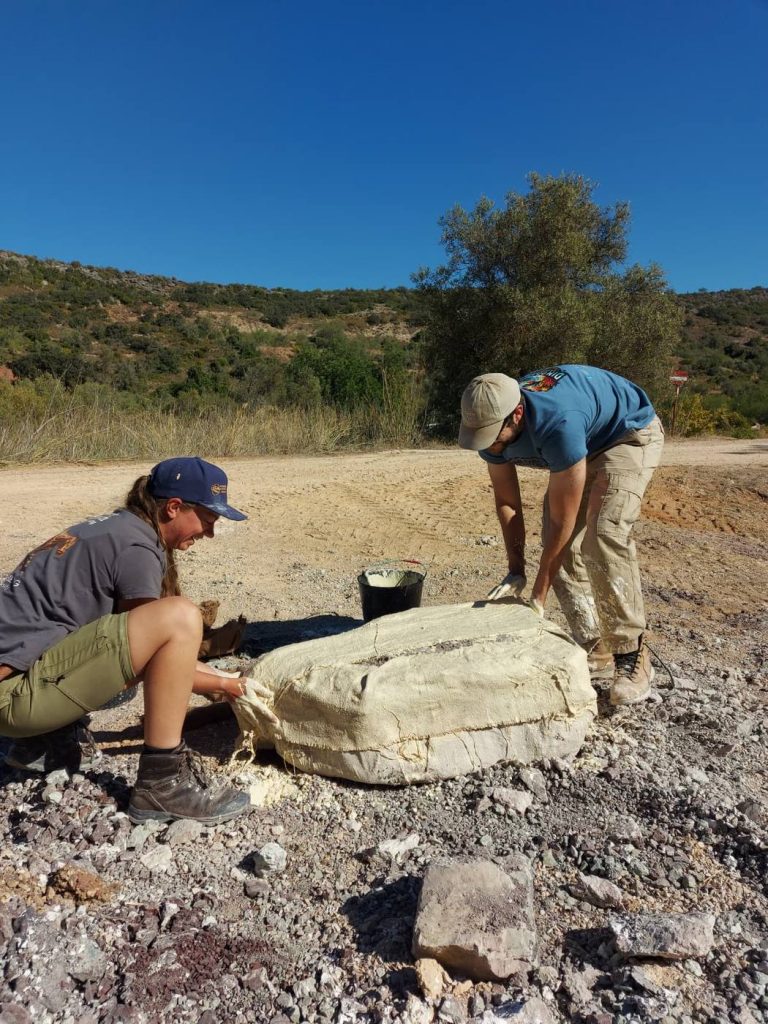
First, the last blocks left unfinished the day before got their final coat of plaster. Then every block was checked, labeled and tied down, so that each one can be matched to its spot in the hill when the lab opens it.
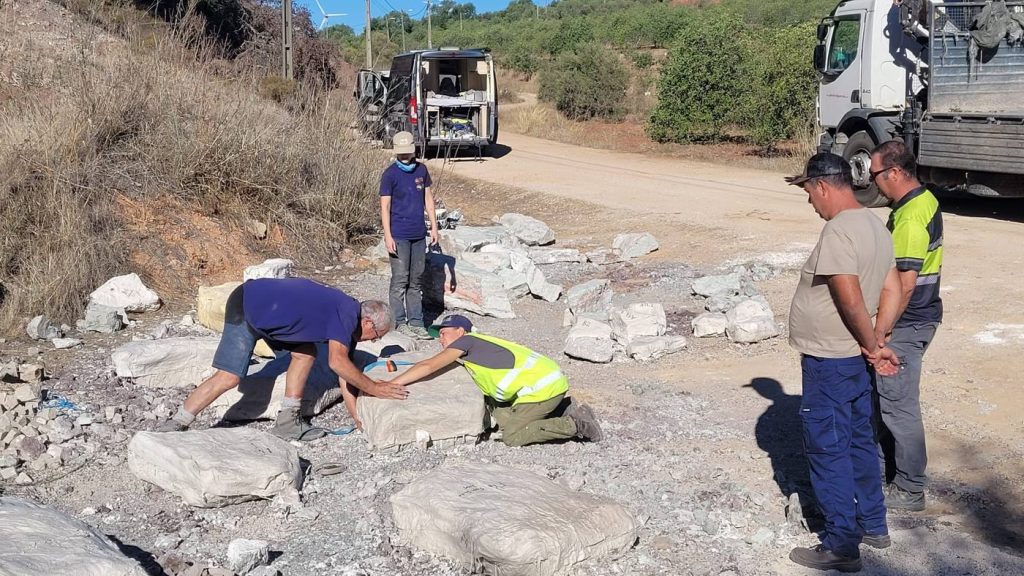
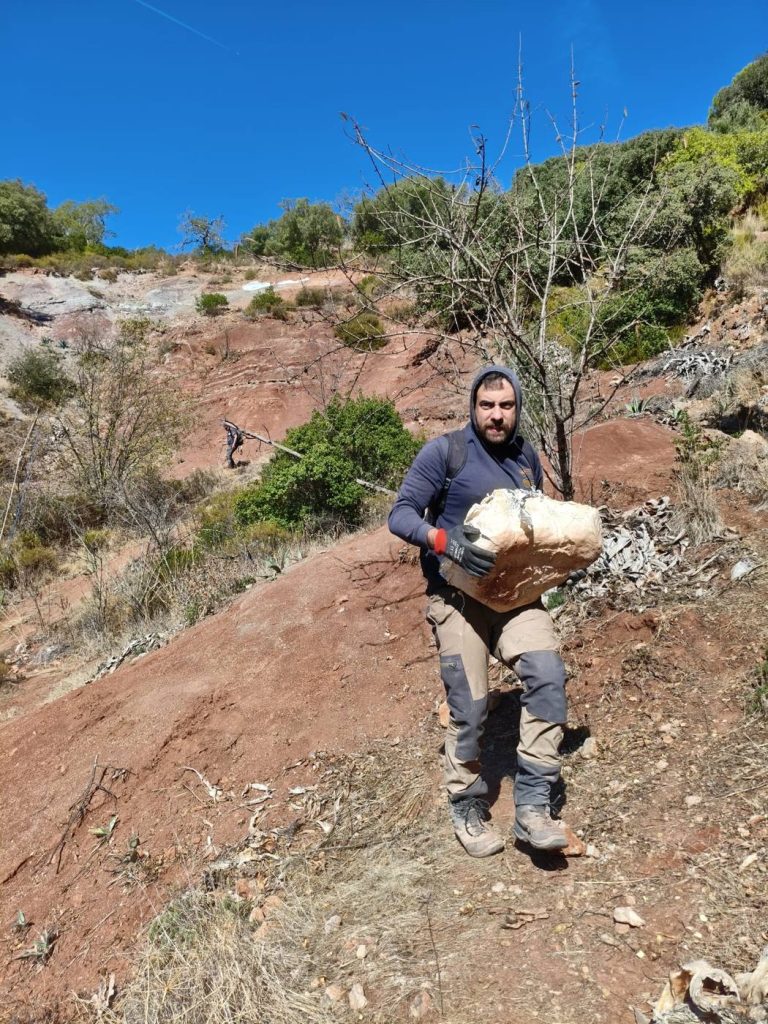
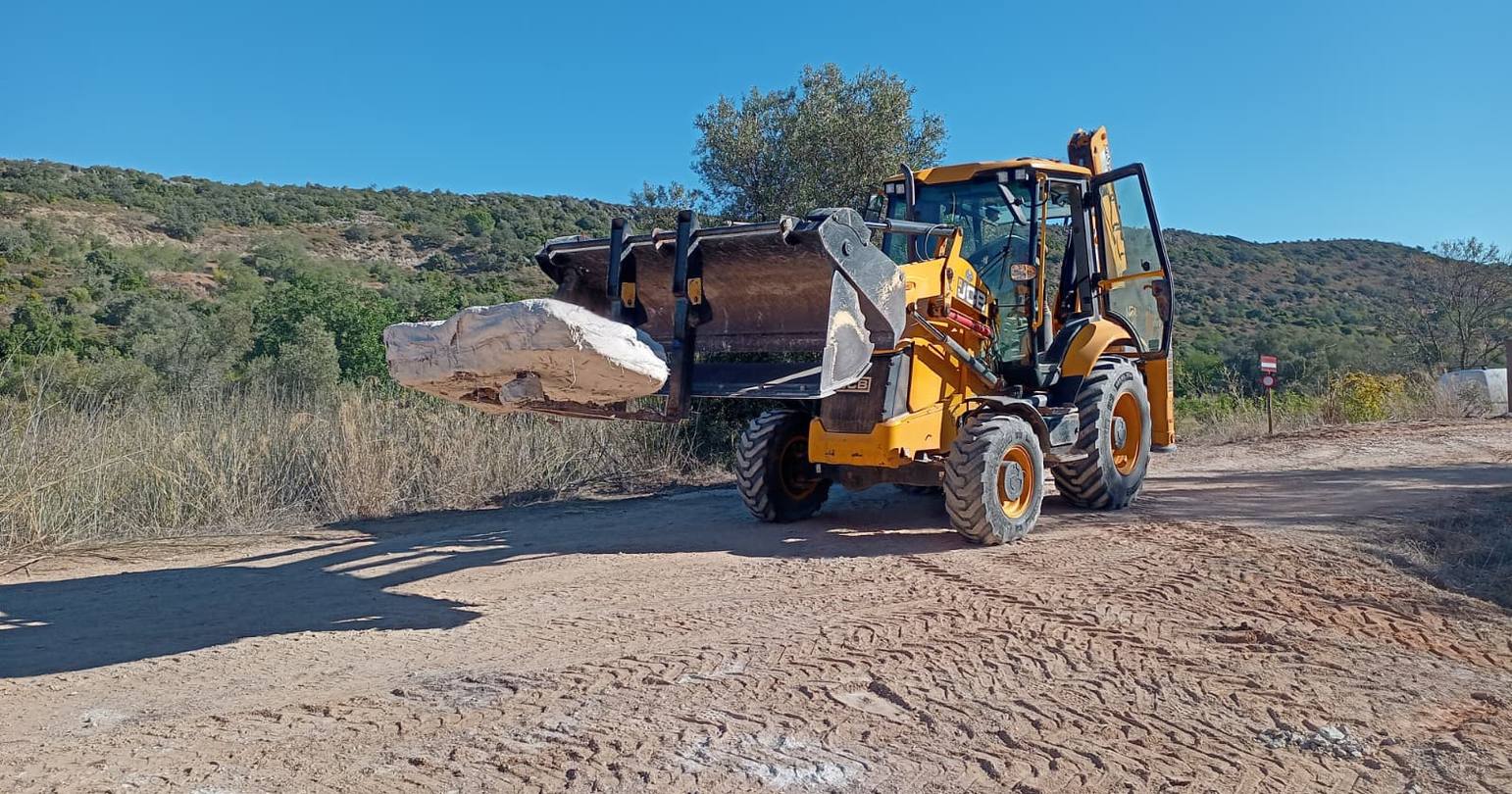
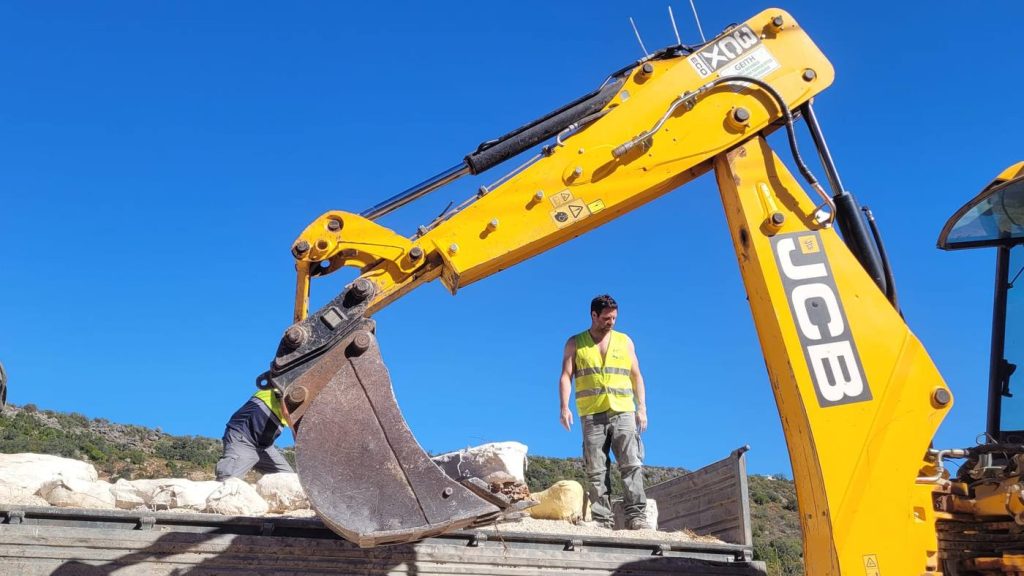
When the truck arrived, the excavator took over. Its operator, Nelson, set the jackets onto the truck bed so precisely that the team took to calling him their surgeon. The team guided each lift from the ground and from the truck itself. Nobody dropped a block. Nobody lost a finger. On loading day, those are the only 2 numbers that matter.
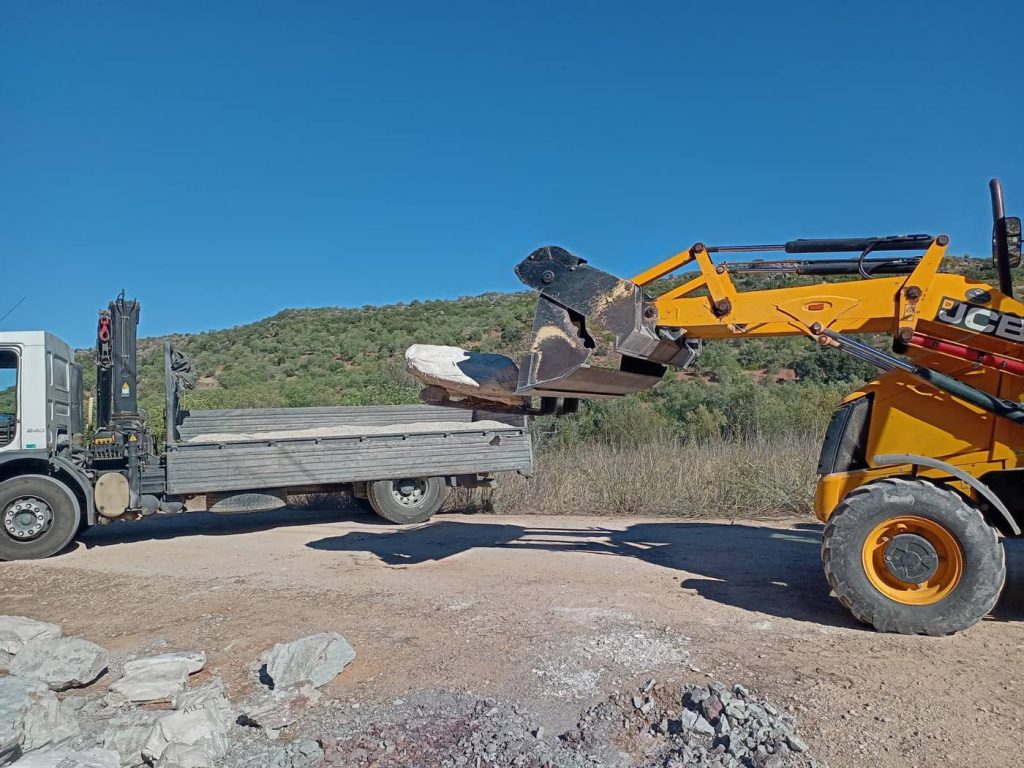
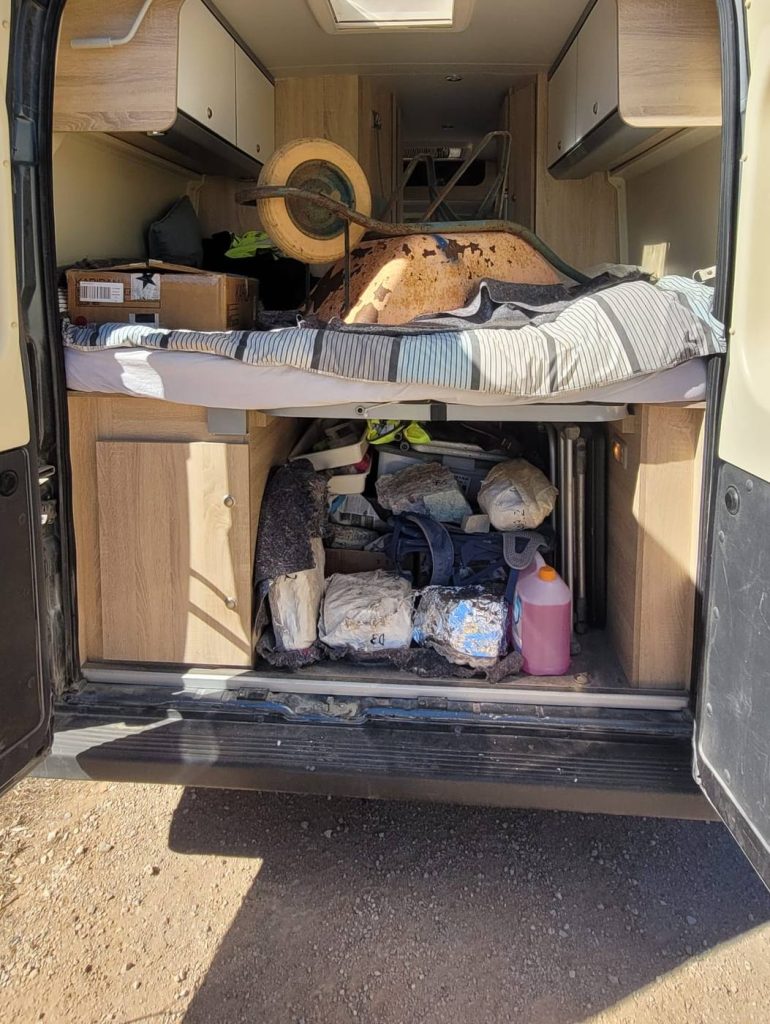
The smaller jackets traveled in arms, in wheelbarrows and in any van with a free corner. One camper van gave up the space under its bed to a row of plaster jackets. They were quiet guests and did not snore.
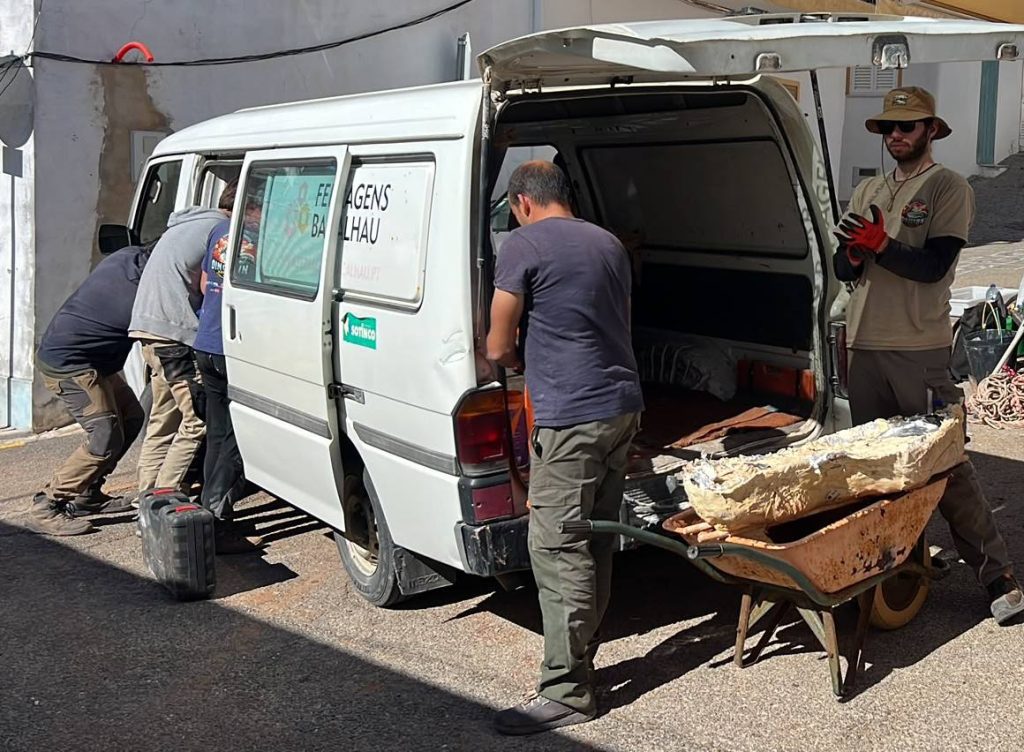
Then came the goodbyes. The team cleaned the house that had been home all season. Ricardo Araújo and Miguel Marx drove back to the village to hand out DinoDawn t-shirts to the neighbors who had helped all season with lunches, the truck and the generator. It was a thank you they can wear.
After the final hugs, the team scattered. Ricardo was home with his family by evening. Marco Turcato drove Sandra Willert and Klara T. Gerken back in the van, a trip of nearly 6 hours and, by Marco’s account, the longest part of the shortest day.
For Ricardo, this was the season the hills began to make sense. The team now reads the geology far better than before, and he already has ideas for how to search smarter next year. Whether next season brings more excavation, more prospecting or both is still being decided.
I’m very, very happy with this year’s success. All of these blocks are absolutely crucial for us to understand the taphonomic context of these layers.
Ricardo Araújo, lead paleontologist
Taphonomy is the study of how a living animal becomes a fossil: how it died, what moved it and what the rock did to it afterward. Each block carries that story along with the bones inside it.
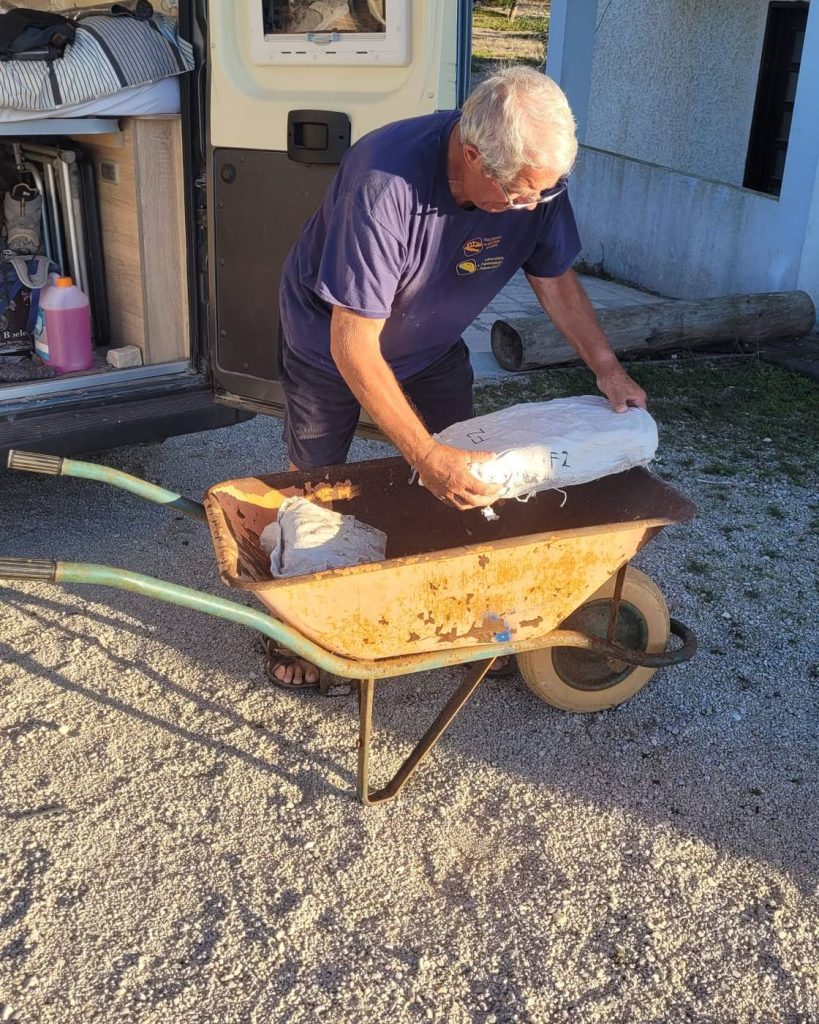
The plan was for the blocks to reach the Sociedade de História Natural on Wednesday. They arrived tonight, 2 days early, a rare thing in the history of moving rocks. Ignace R. Nerinckx was there to unload them by wheelbarrow.
The hills are covered and quiet until next season, and the plaster starts coming off this winter. When the lab finds something worth telling, it will be told here first.