ArtistVictor Carvalho
SubjectsA phytosaur and a placodont
ToolsPencil, red pencil, paint
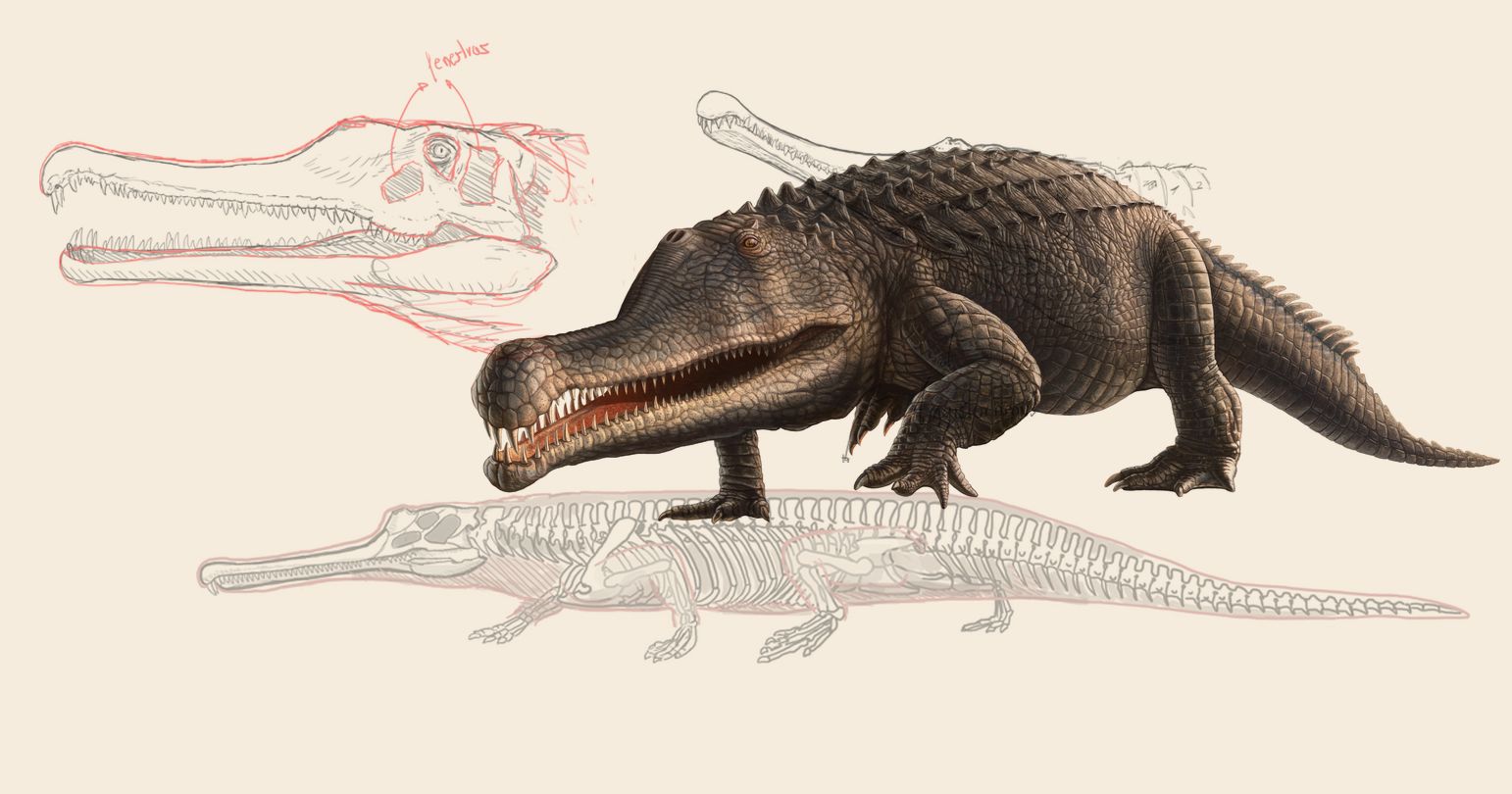
Long before the blocks reach the lab, someone on the team is already asking what the animals looked like. On the DinoDawn team that someone is often Victor Carvalho, paleontologist and scientific illustrator. Victor answers with a pencil.
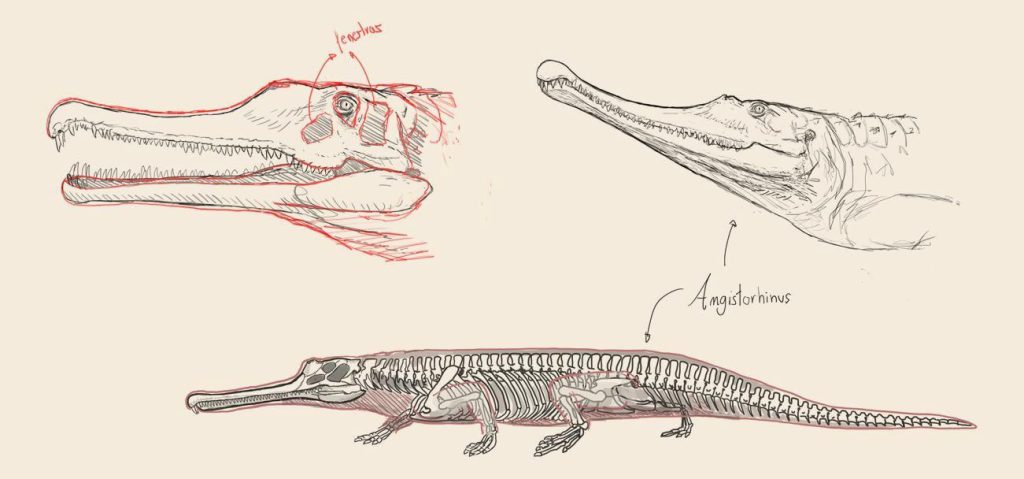
His Angistorhinus begins as a bare skeleton, drawn vertebra by vertebra down a tail that seems to go on for a week. Next he redrew the skull in red over his own pencil lines, with a note to himself about the “fenestras,” the openings in the skull that tell a paleontologist how the head was built. Armor, teeth and color come last.
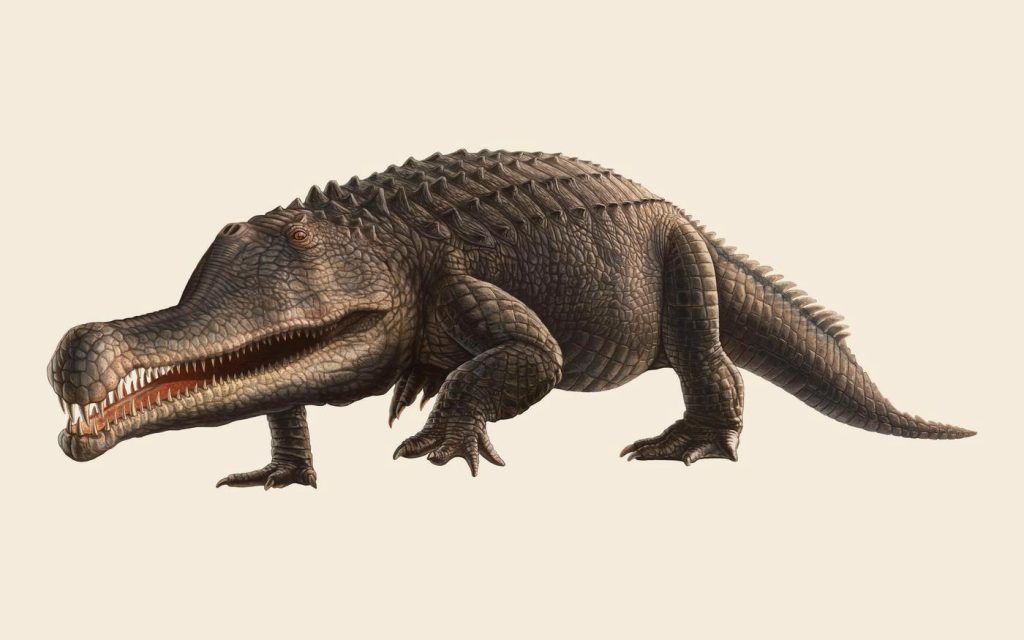
The finished animal is a phytosaur with a skull more than 1 meter long and nostrils set up near its eyes, so it could likely breathe while lying almost hidden in the water. It lived in what is now North America, at about the time the red rocks of the Algarve were forming.
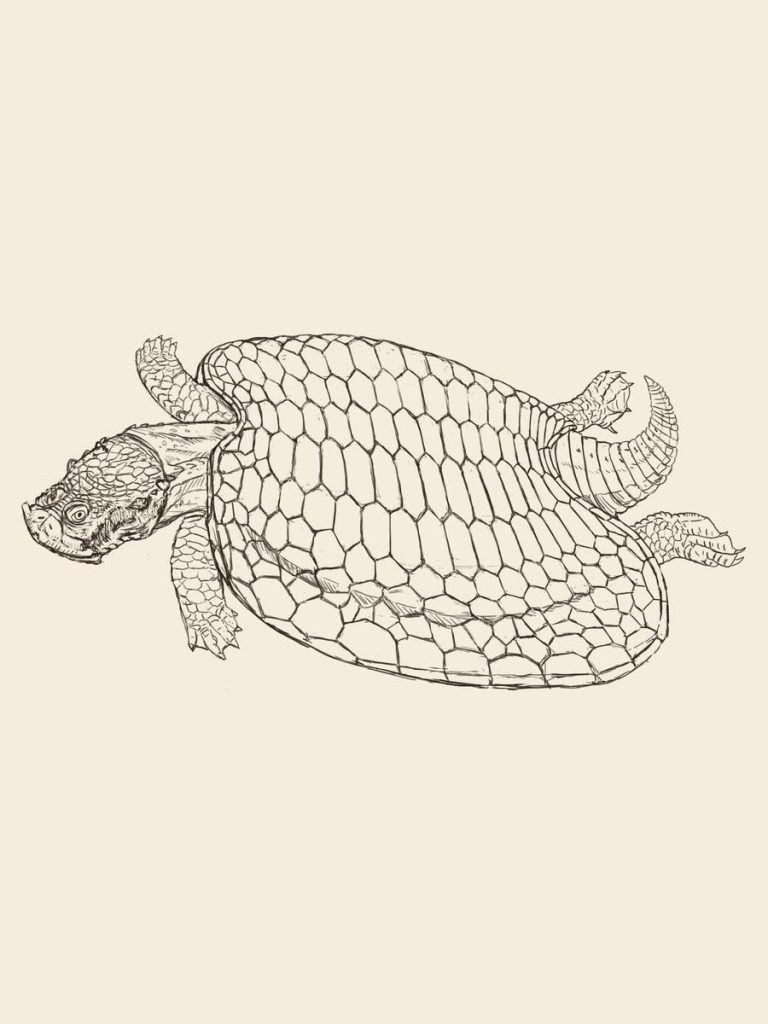
His other subject looks like a dinner plate that grew a face. Henodus was a placodont about 1 meter long, first named from Germany in 1936. Its shell was wider than its body. Its broad, square mouth may have strained food from the water or scraped plants off a lagoon floor. In 2018 Hugo Campos and Octávio Mateus reported placodont armor plates from the Algarve with similarities to Henodus. In Victor’s first pencil version the animal is seen from above, and the shell is drawn plate by plate.
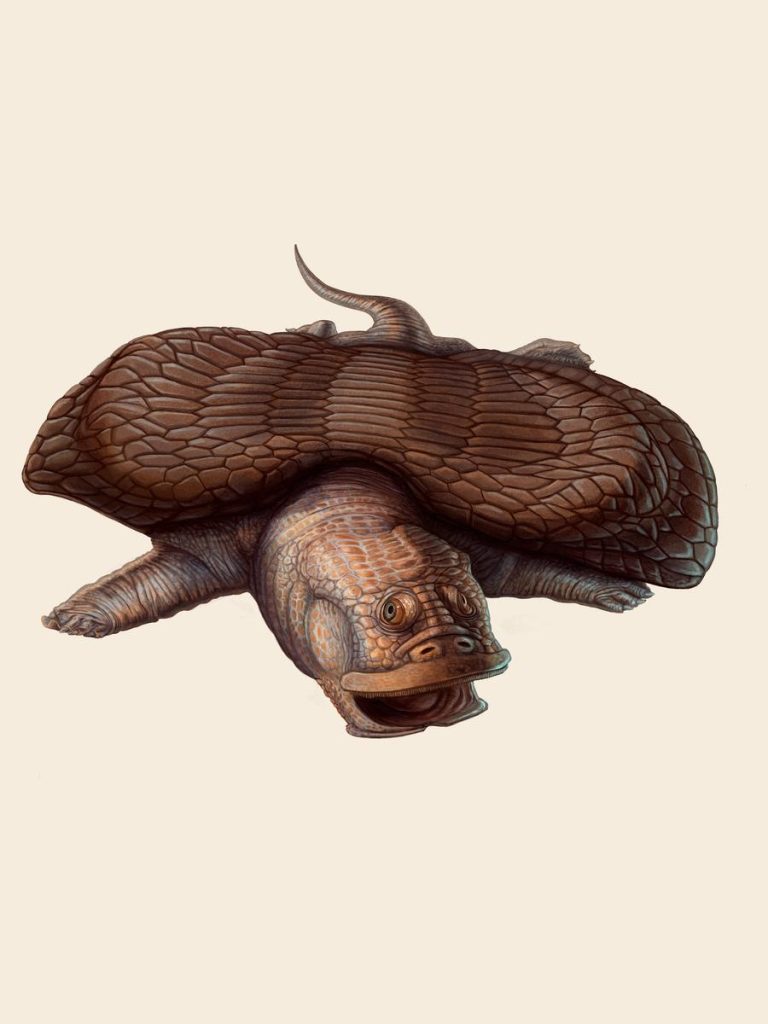
Bones tell the team which animals lived here. Victor’s job is to put them back together, one pencil line at a time. Both finished paintings now appear on the Kids and Science pages.