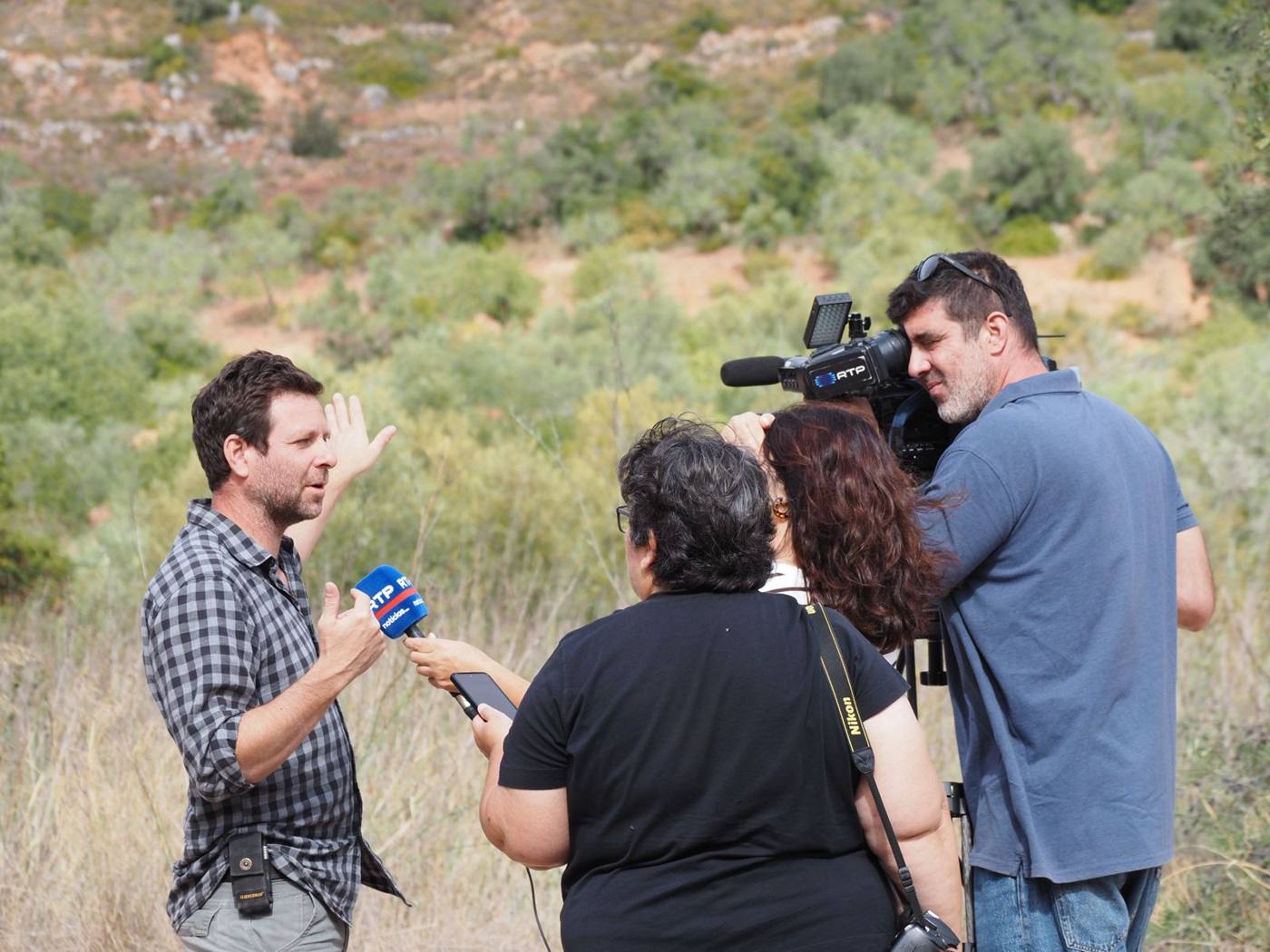
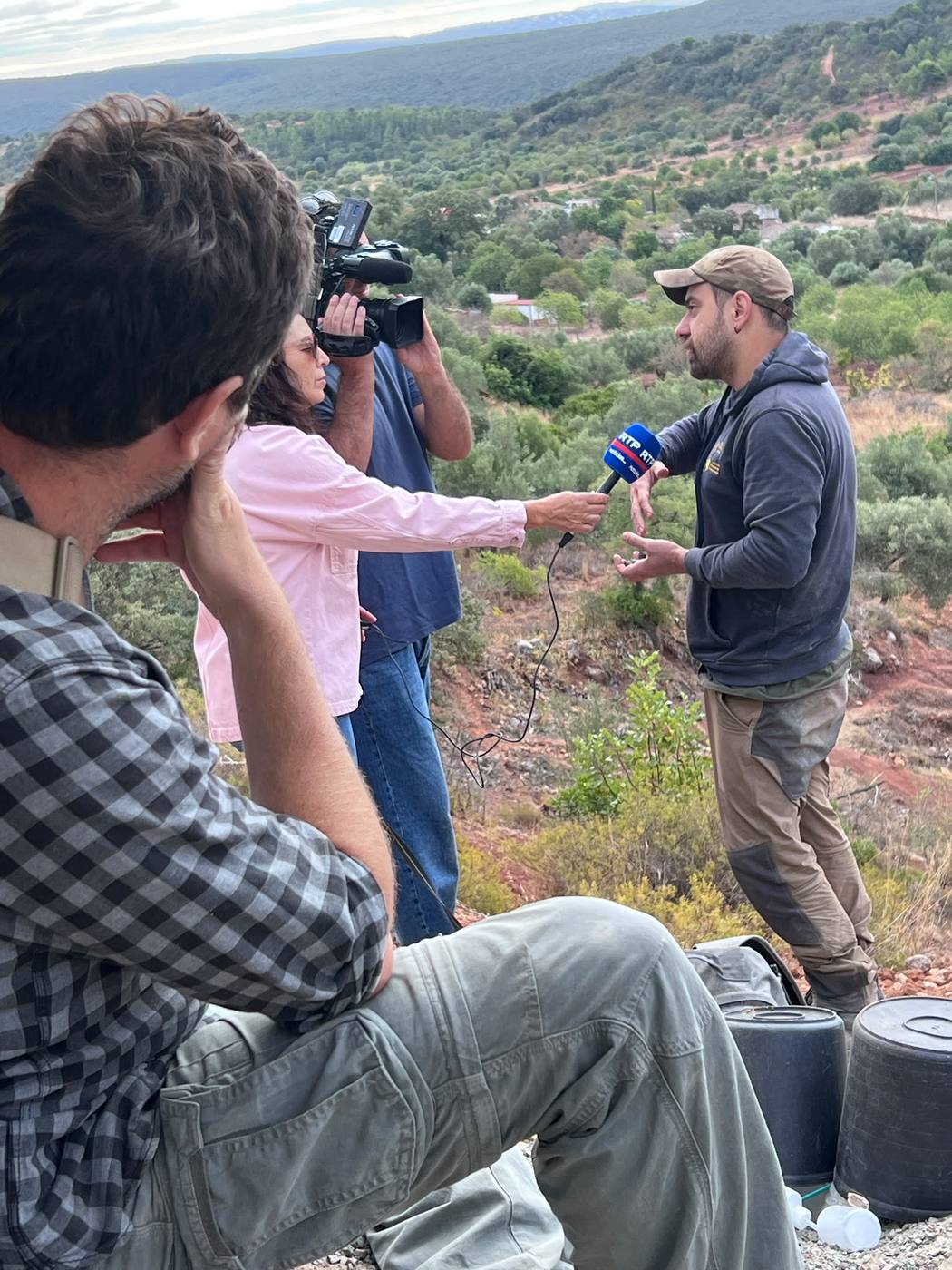
MediaRTP television
BlocksInto plaster
Season endsOctober 26
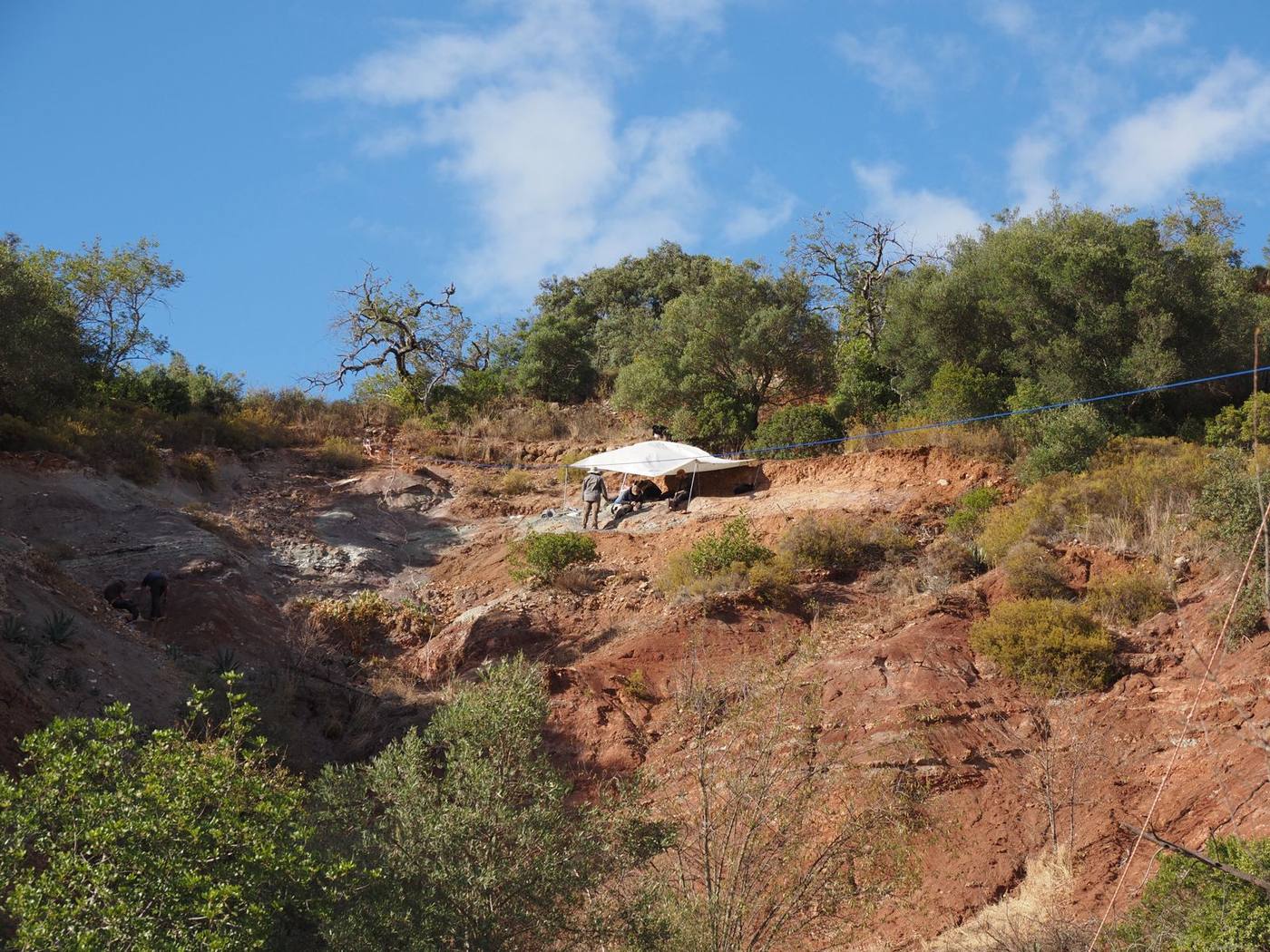
The day before, the excavator said goodbye for the last time. Goodbyes in the field rarely stick. On day 7 it came back, this time to undo its own work, smoothing over the first site and putting the hillside back the way the team found it.
While it worked, the team went through the blocks one by one. Each block was lowered to the bone bed, photographed from every side for a 3D model, and only then wrapped in plaster. The blocks of highest interest are now jacketed for the lab.
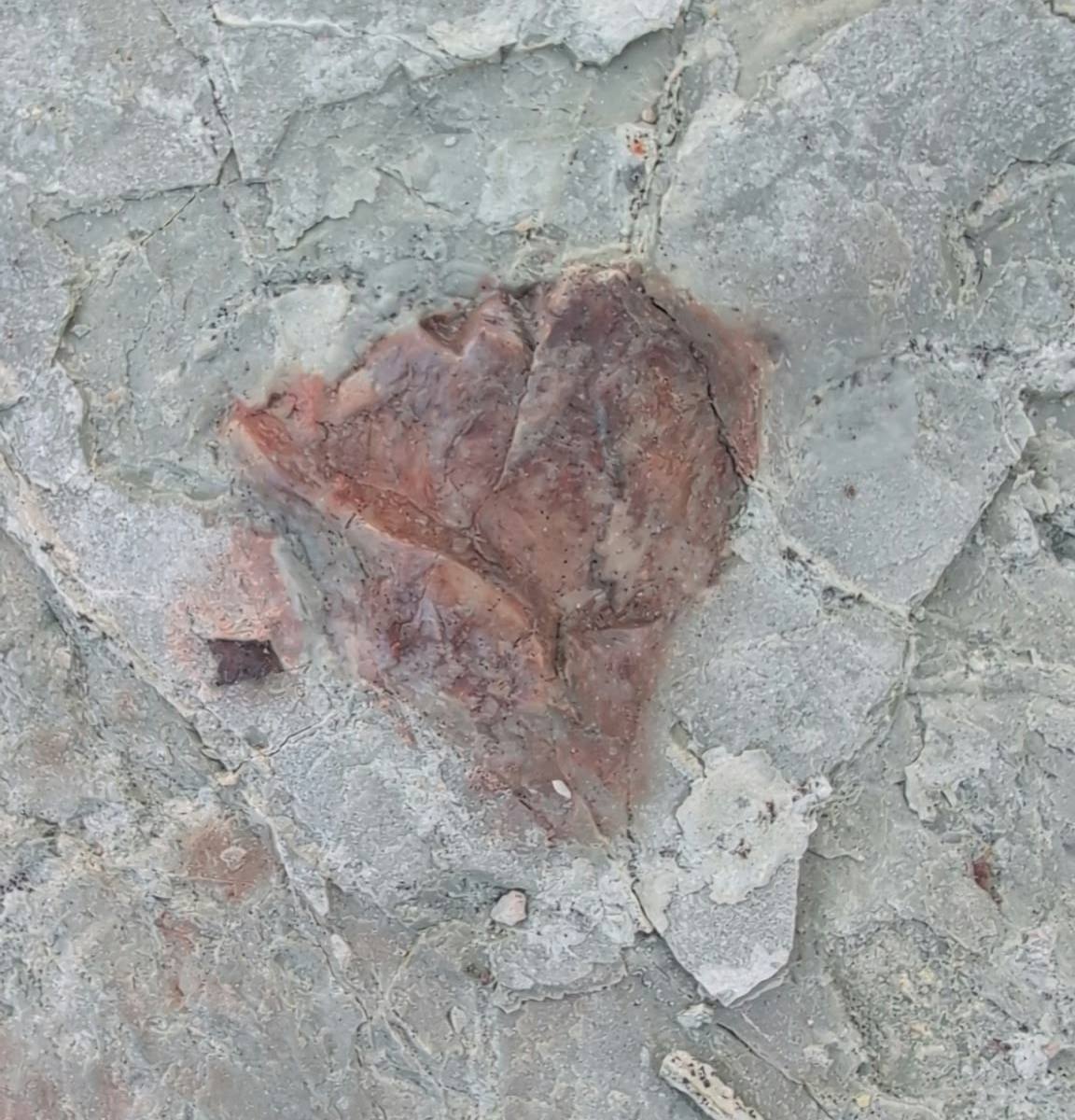
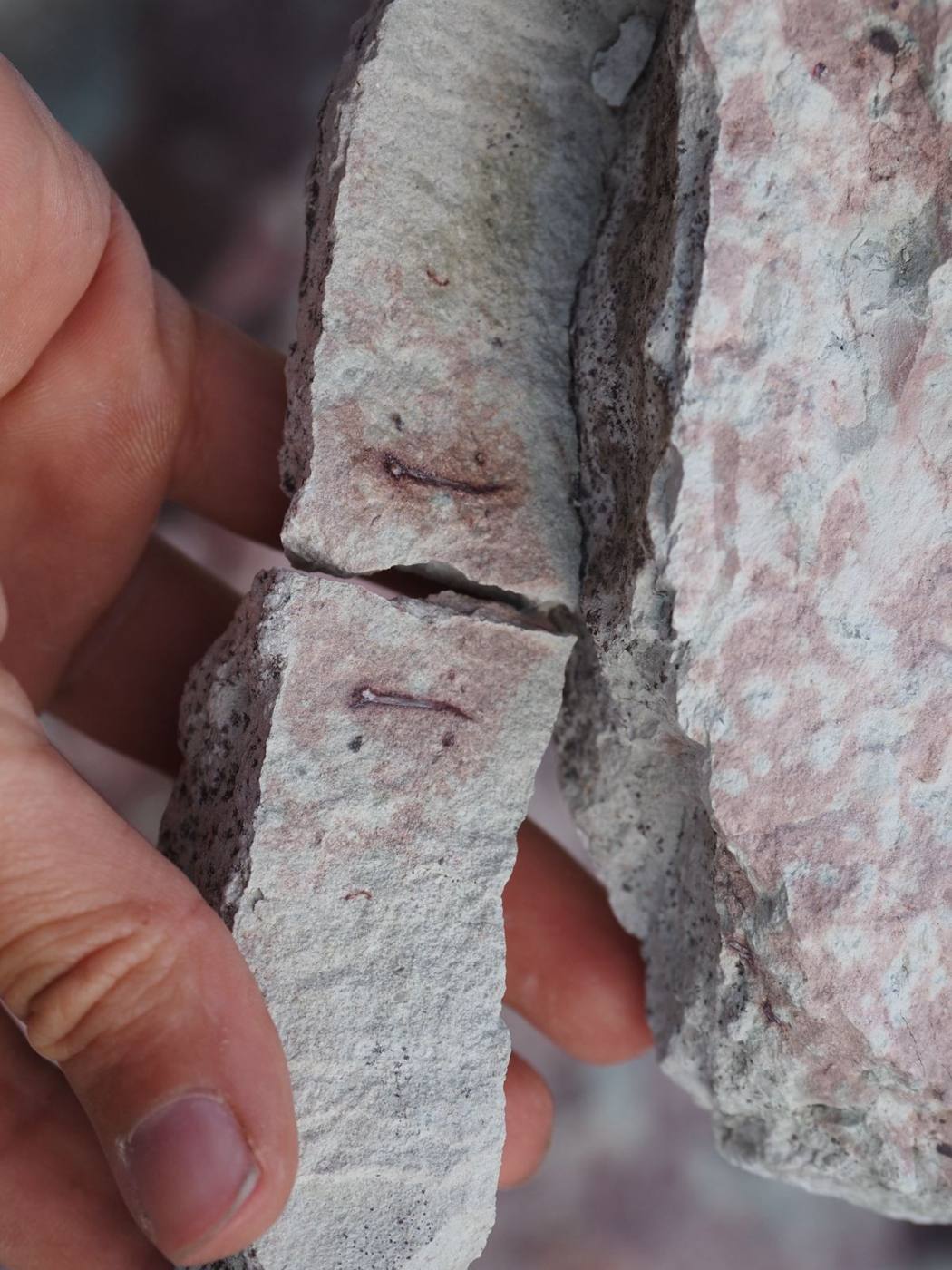
Lowering the blocks paid off. Strange marine reptile bones turned up, and so did many teeth. They come from many kinds of animals, from fish to several types of marine reptiles. Osteoderms still outnumber everything else.
This layer is a numbers game. You sort through thousands of osteoderms, and then a tooth turns up from an animal no one has described from the Triassic of the Algarve.
Miguel Marx, field team
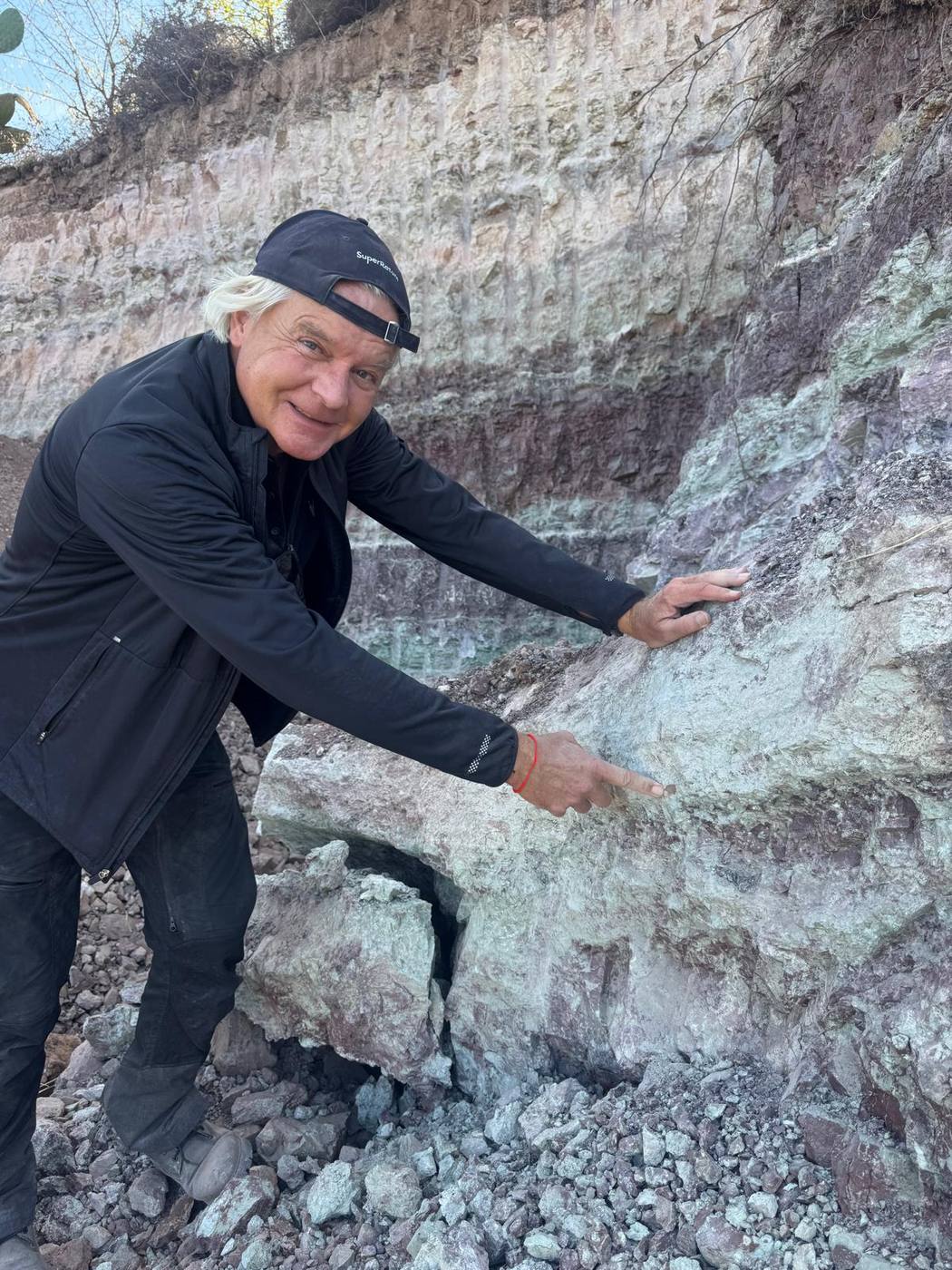
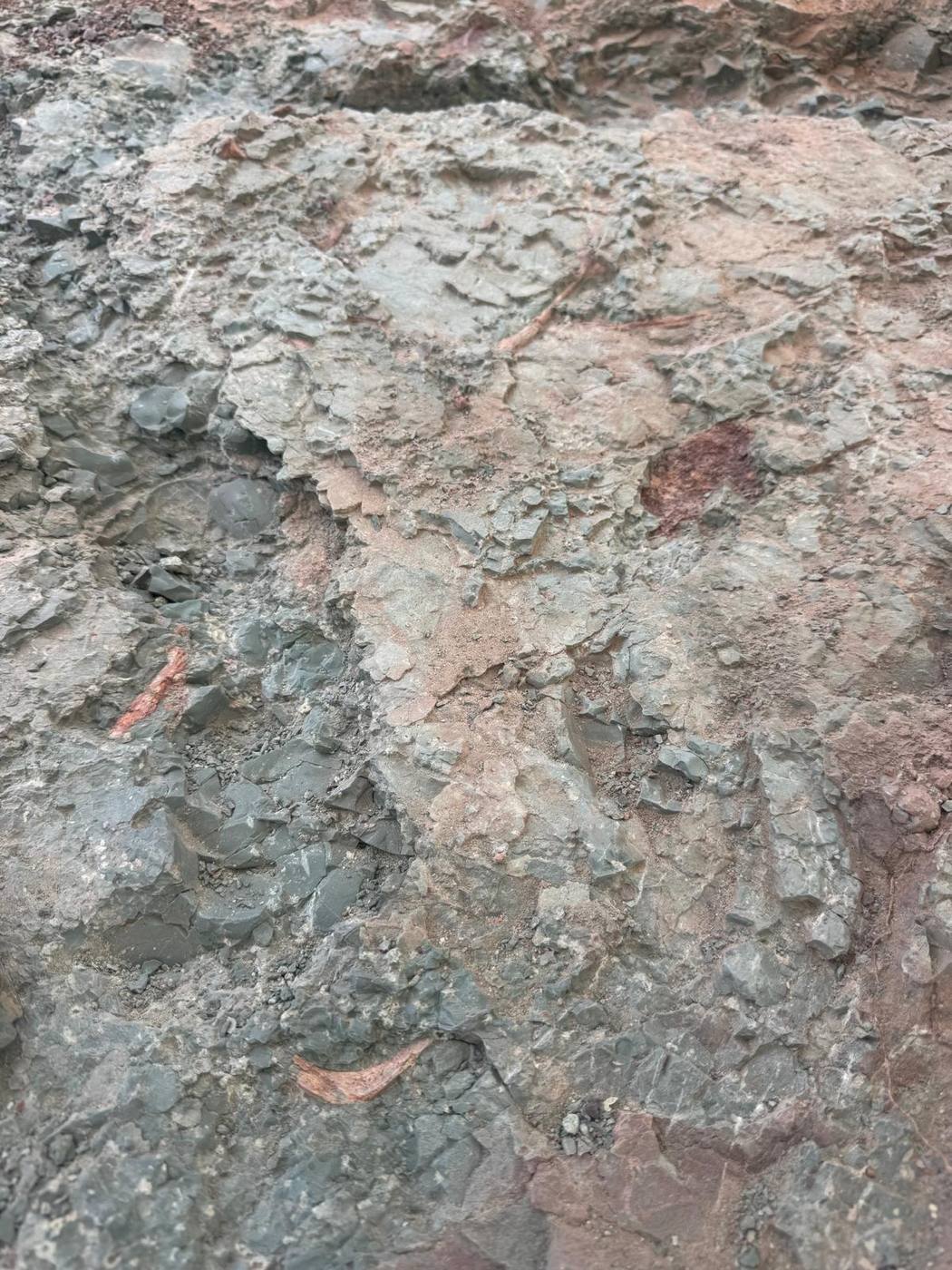
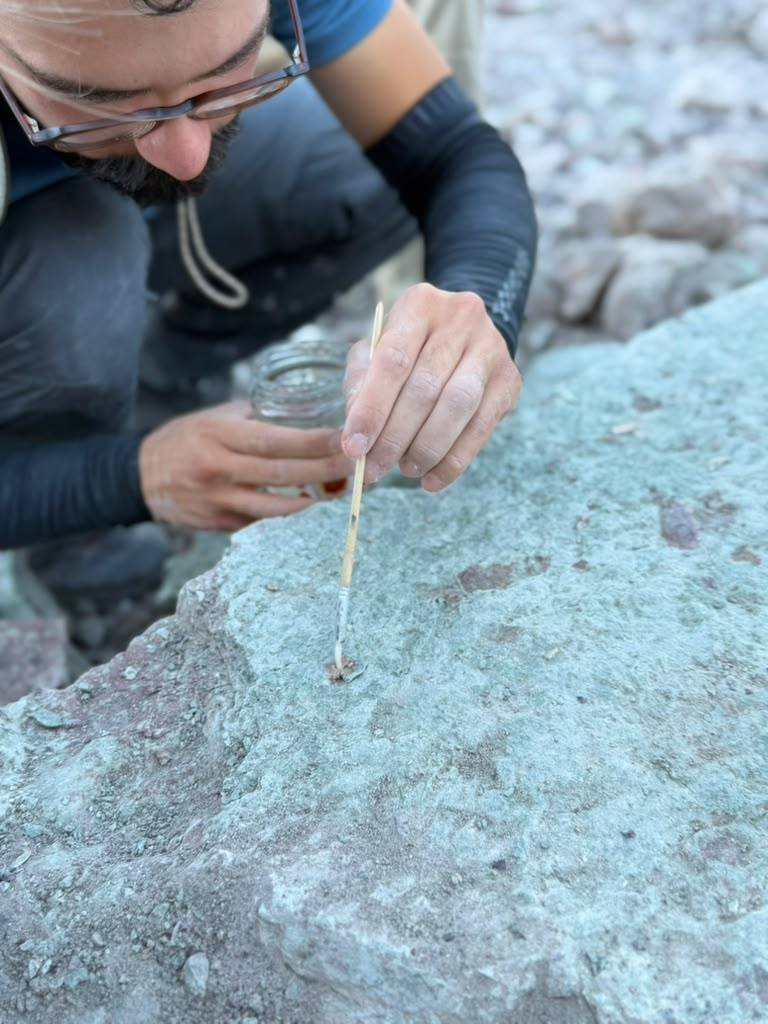
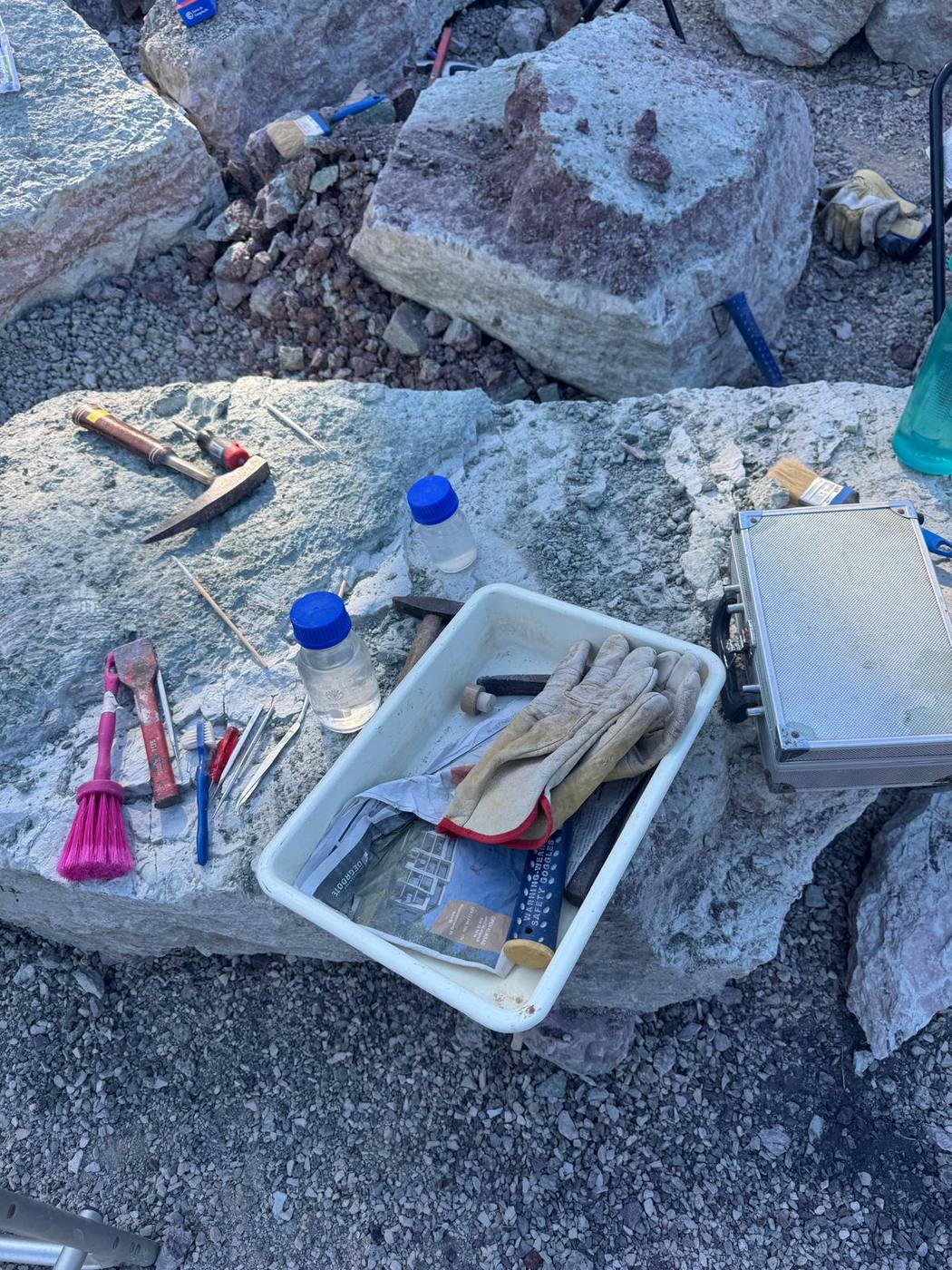
At the second site, the day began the way they all do there: coffee in the village first, the hill second.
The dig also drew a television crew. RTP followed the team around, and Helena Figueiras interviewed Victor Carvalho on the hillside. Ricardo Araújo told the cameras why the site matters for science and for protecting Portugal’s natural heritage.
João Neves, David Isserman and Dave Finnegan visited another school, where the students plainly had a blast.
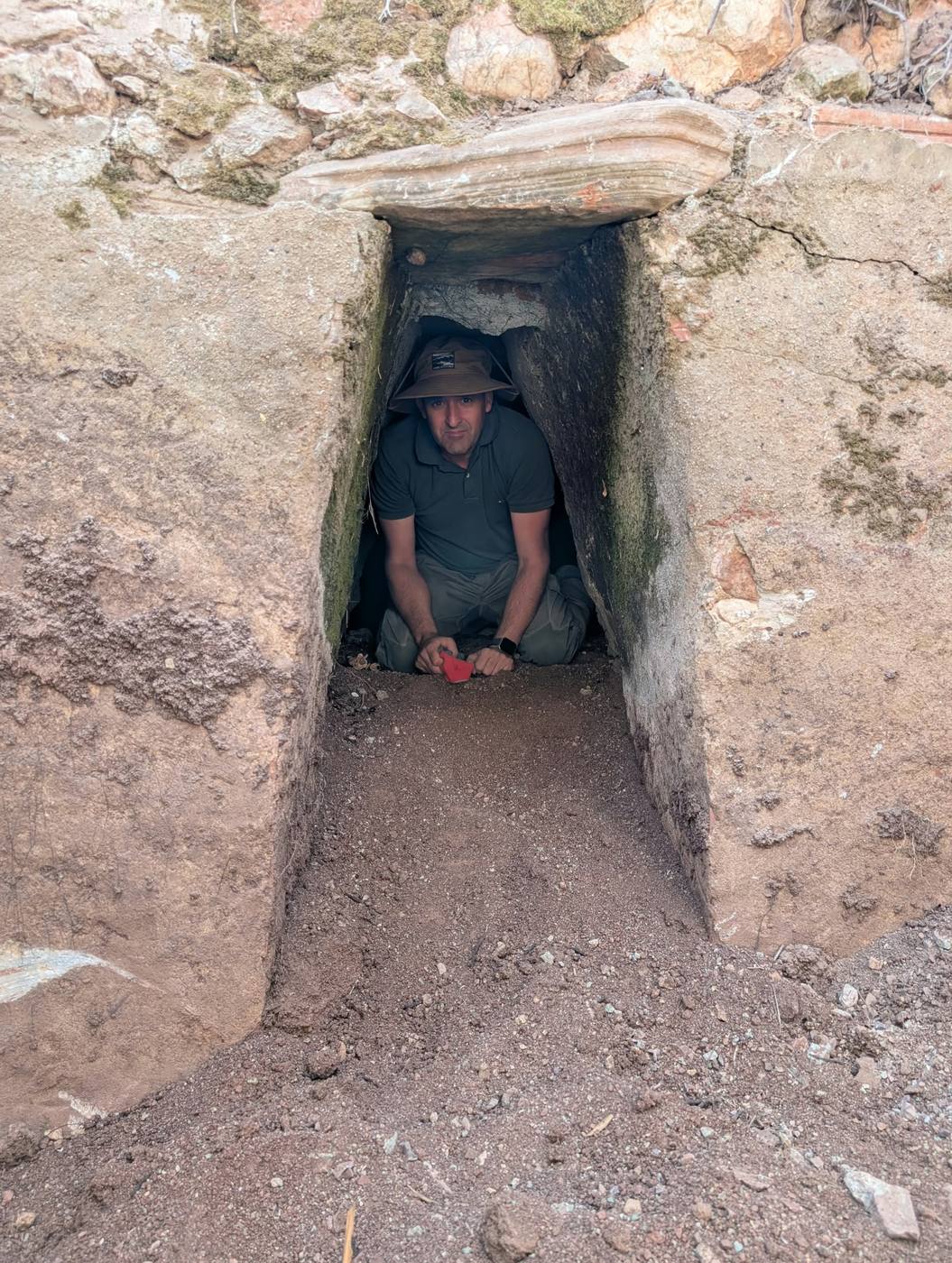
Not every discovery was a fossil. Luís Domingos crawled into a historical stone well near the dig, for science, presumably.
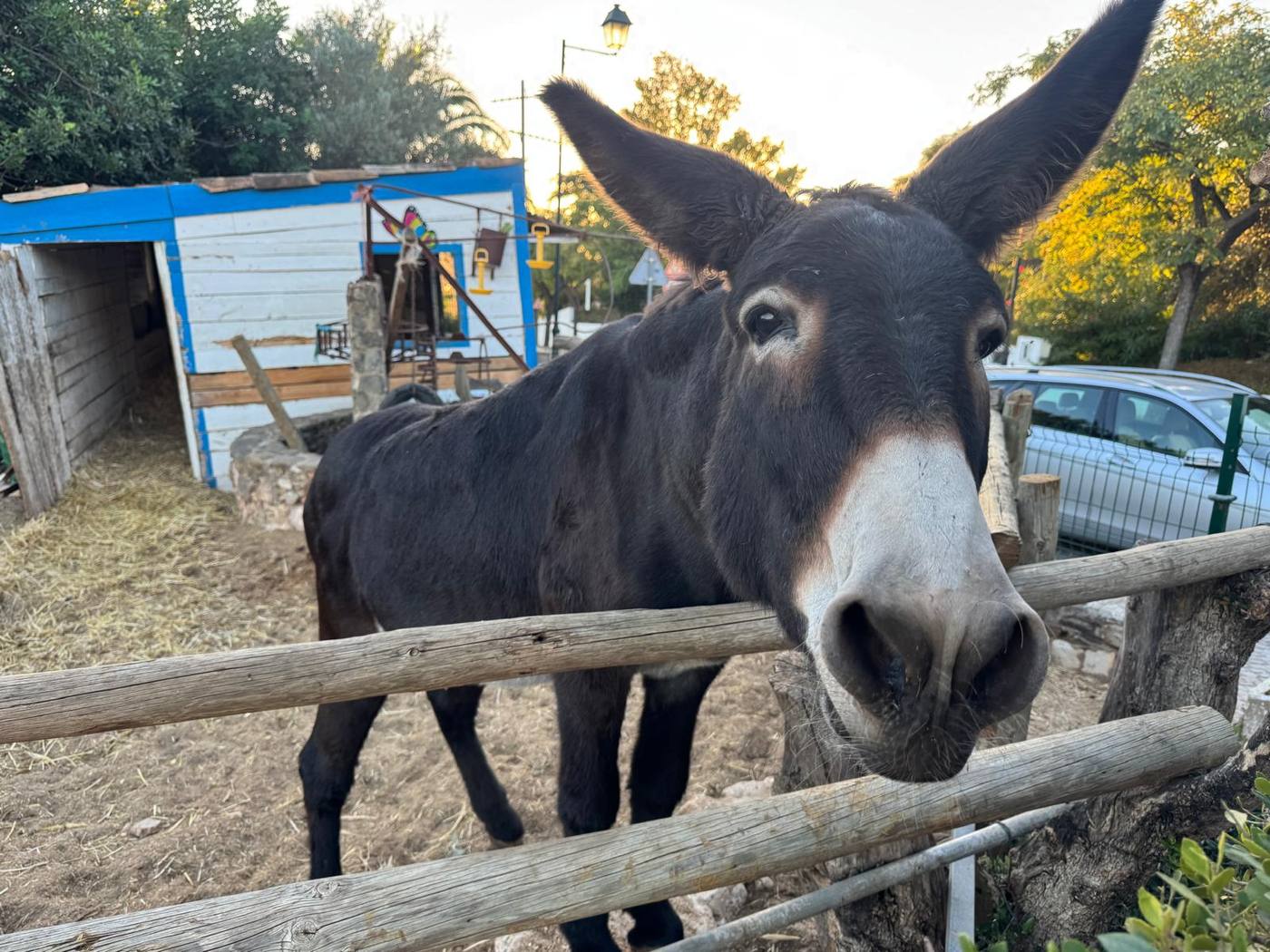
The warmest welcome of the day came from Baltazar, a donkey at a restaurant near the dig. He inspected every visitor at the fence and approved them all.
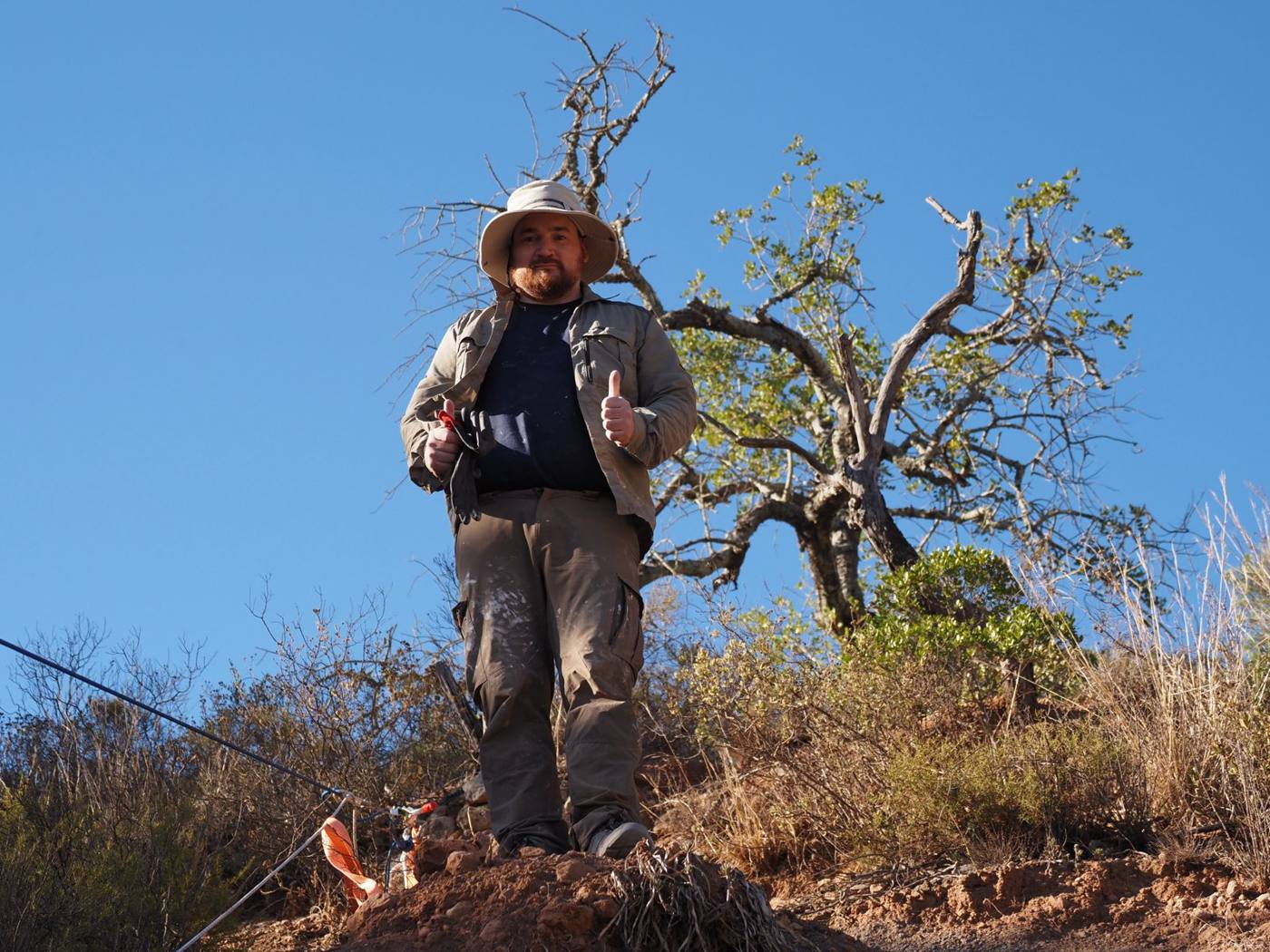
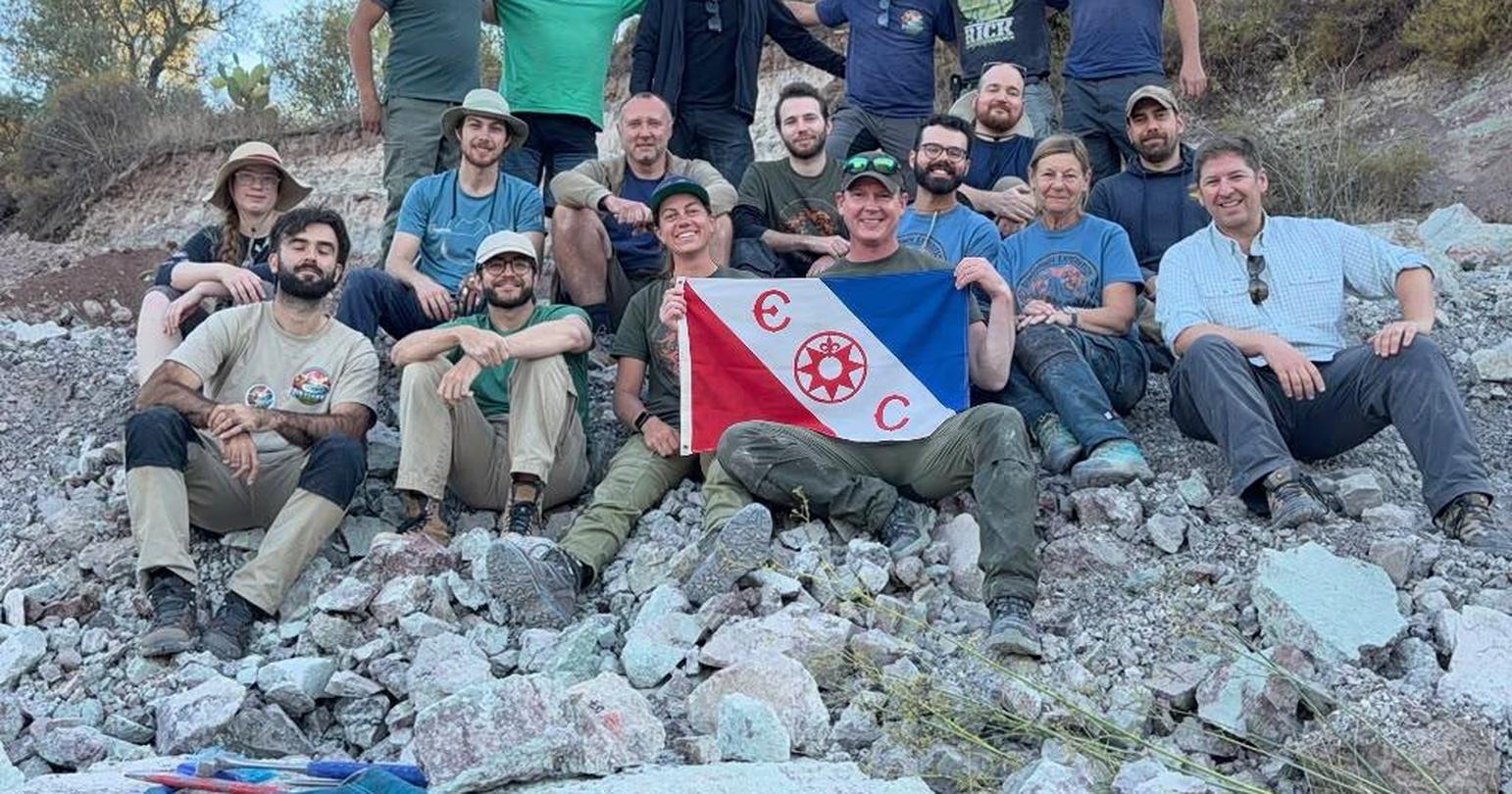
At day’s end the team gathered on the hill for a photo, about as dusty as the blocks.
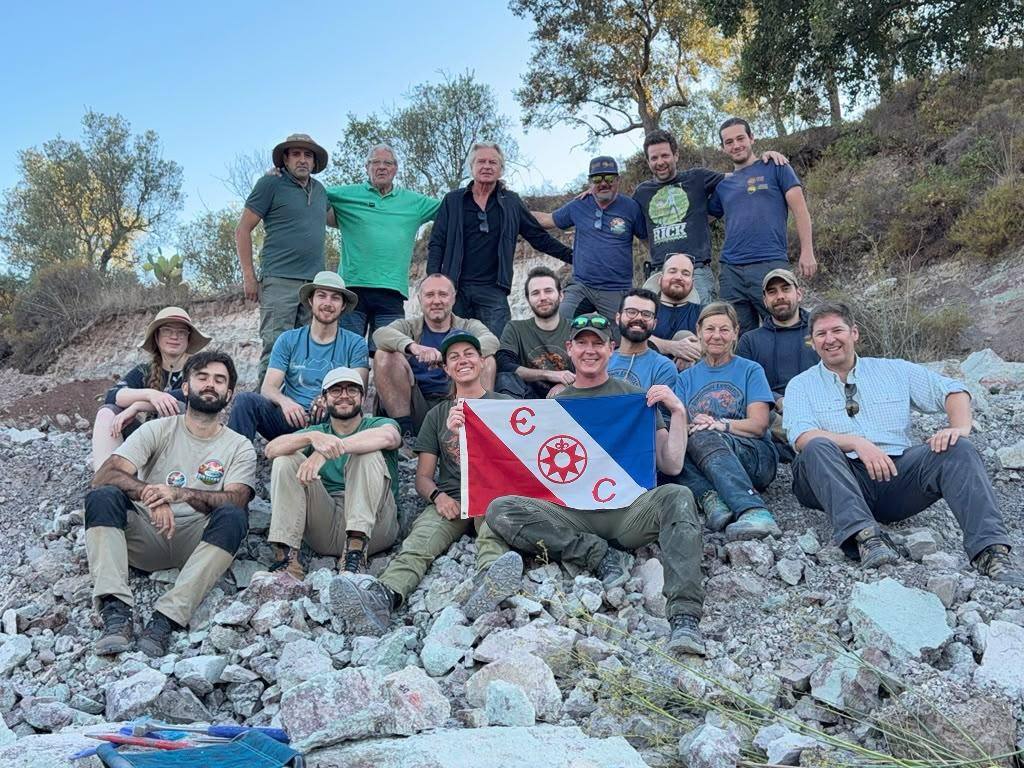
The season ends on October 26, and the work has turned from digging to packing. The rock is out. Now it has to get home.