Algarve, Portugal · Season opens October 17, 2026
DinoDawn Expedition
About 230 million years ago, when the first dinosaurs were appearing, the Algarve was a land of rivers and lakes. On October 17 an expedition of scientists and explorers returns to its red hills to search for animals no one has seen before.
Field season 2026 opens in
03 days 18 hours 20 minutes 43 seconds
The 2026 field season is under way
Day 1 in the field
Season 2026
The field season has closed
Field season 2026
The Search Resumes October 17, 2026
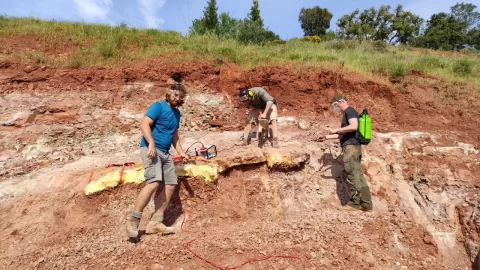
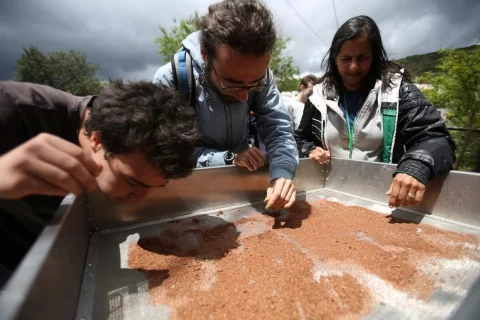
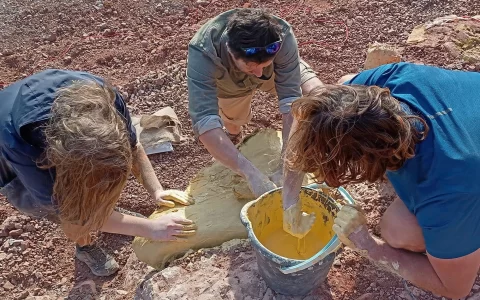
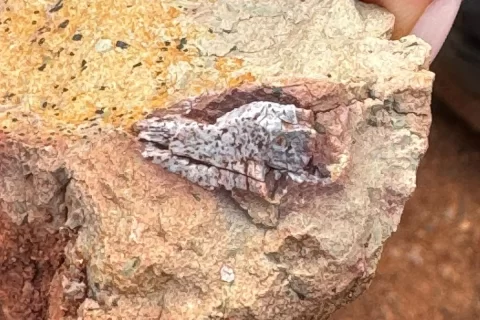
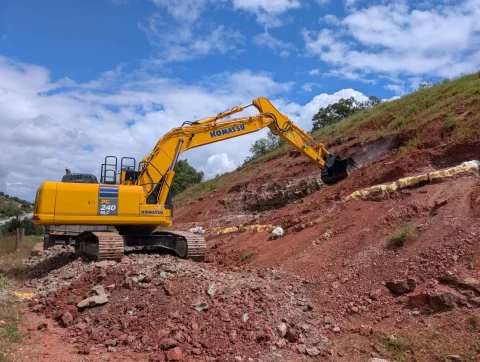
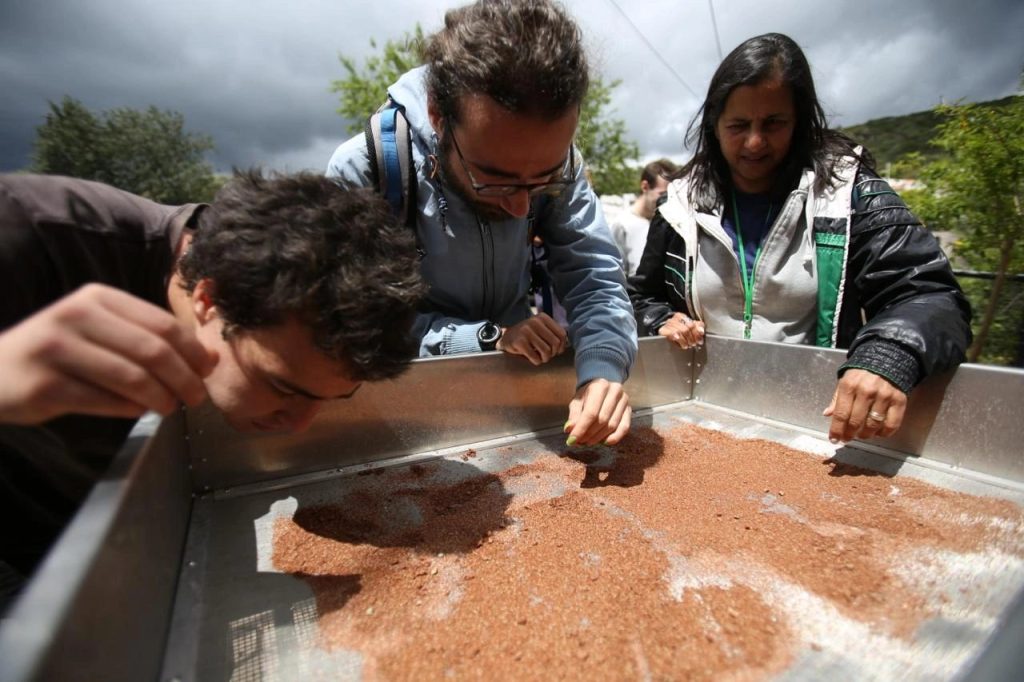
In 2025 the team cut blocks of bone-bearing rock from an Algarve bonebed and washed sediment from the hills of Loulé through fine sieves. Among the fossils were the first clues that early relatives of mammals lived here. This season the expedition goes back to the same beds for more.
230Million years old, Late Triassic
100+Fossils sieved in the hills of Loulé
20+Plaster-jacketed blocks carried out
2 mLength of the largest amphibians here
Follow the 2026 Season
From October 17 the expedition reports from the field on Instagram at @dinodawnexpedition, and new photographs go up on the Field Photos page.
A Lost World of Rivers and Lakes
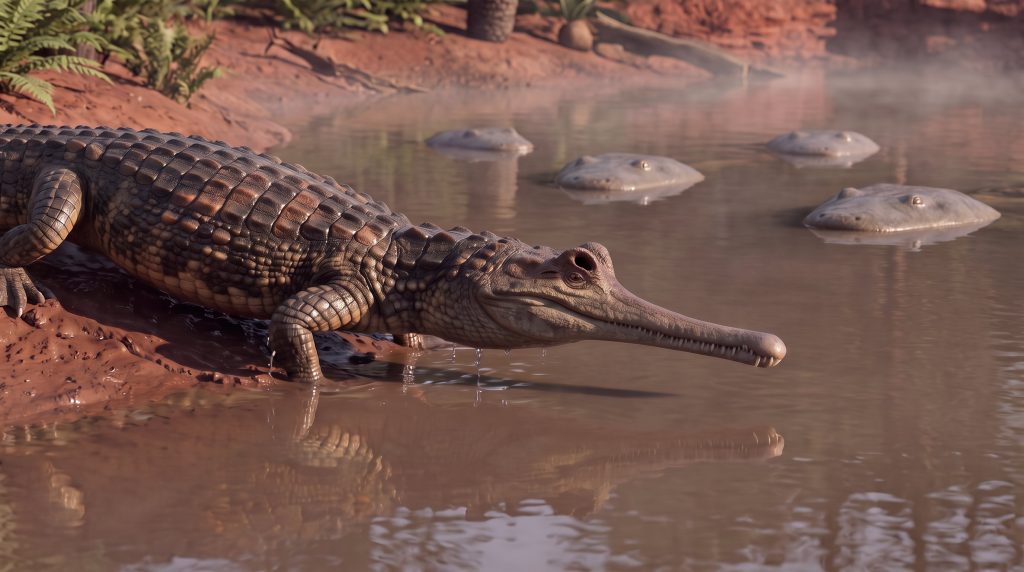
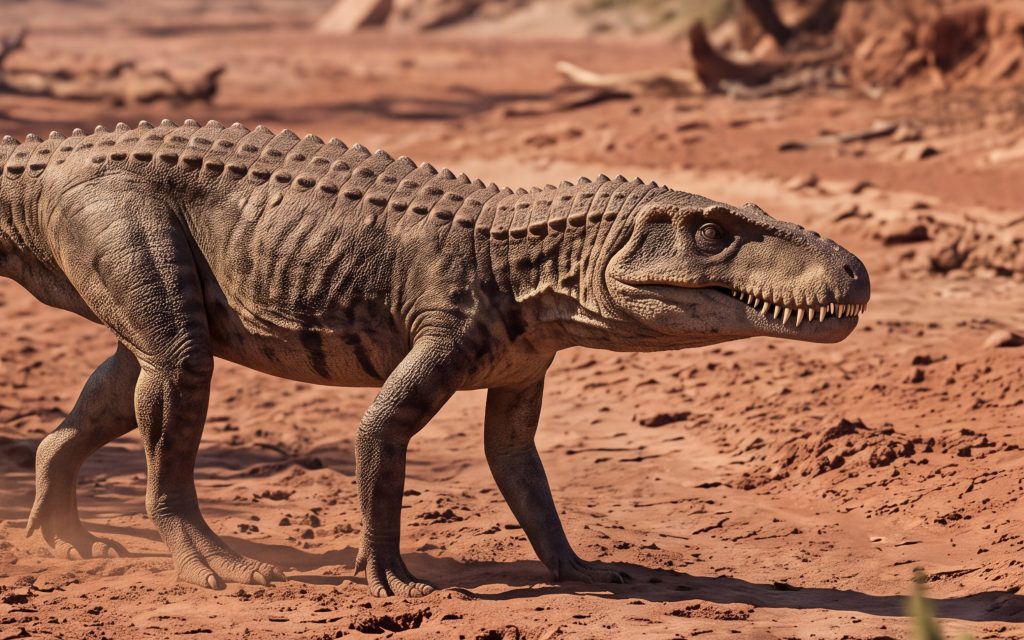
These red hills were once rivers and lakes on a single supercontinent. The Atlantic Ocean did not yet exist. Amphibians up to 2 meters long fed on fish in the shallows beside crocodile-like phytosaurs.
Before the Dinosaurs Took Over
Tyrannosaurus rex lived closer in time to us than to the animals of these hills. In their world crocodile cousins ruled the land, and dinosaurs were rare newcomers.
Then, between 234 and 232 million years ago, volcanic eruptions unsettled the climate and rain fell on land that had been desert. Dinosaurs spread in the wetter world that followed, and the forerunners of mammals became warm-blooded.
How Old Is 230 Million Years?
Scroll down through the rock. Deeper is older, and the red beds of the Algarve lie near the bottom.
- Today You are here Our species is about 300,000 years old. On this scale, all of human history is the thin gold line at the top of this column.
- 66 million years ago An asteroid ends the age of dinosaurs Tyrannosaurus rex was among the last of them, 68 to 66 million years ago.
- About 130 million years ago The first flowers bloom
- About 150 million years ago Portugal's Jurassic giants Long-necked sauropods walk the coast of what is now central Portugal.
- About 180 million years ago The Atlantic Ocean begins to open
- 201 million years ago A mass extinction clears the way Crocodile cousins lose their hold on the land, and dinosaurs take over.
230 million years ago
The animals of these hills
Amphibians up to 2 meters long fed on fish here beside crocodile-like phytosaurs, and dinosaurs were rare newcomers. This is the world the expedition is searching.
A few million years earlier, between 234 and 232 million years ago, rain had come to a supercontinent that was mostly desert.
What the Team Is Looking For
Some of the 2025 fossils are smaller than a grain of rice. The possible mammal relatives among them are now being studied for publication. This season the expedition is after more of that evidence, and after animals no one has yet named.
Become a Patron of the 2026 Season
Like the great expeditions before it, DinoDawn is non-commercial and runs on patrons. Gifts pay for what research grants leave out, from field supplies to preparing each fossil in the laboratory.
Gifts from $10 bring season updates by email and the 2026 season report. From $500 you also join a live video call from the field in October.